
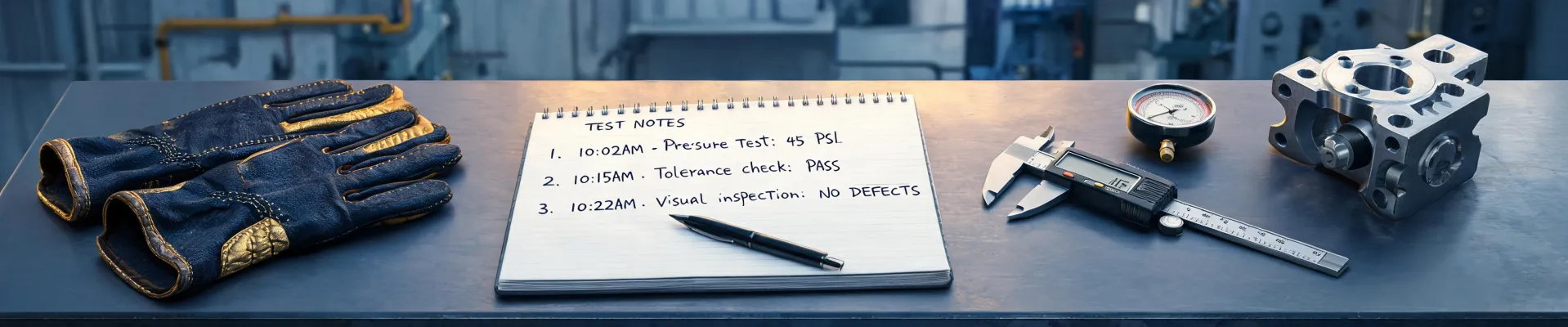
Gloves are the weakest link in most PPE programs. In our Q1 2024 quality audit, I rejected roughly 7% of first deliveries due to spec deviations—and the root cause wasn't bad manufacturing, it was bad specification. Hand injuries are the most common workplace incident across industrial sectors. Yet gloves are consistently the last piece of PPE to get real scrutiny.
I'm a quality and brand compliance manager at an industrial safety equipment company. I review every glove shipment before it reaches customers—200+ unique SKUs per year, four years running. And there's a pattern I can't unsee: a worker will stand there in Irish Setter work boots and a properly fitted pair of safety goggles, then grab whatever gloves sit closest to the bin. Feet and face get researched, fitted, tested. Hands get leftovers.
That's backwards. Hand injuries account for a disproportionately large share of workplace incidents compared to foot or eye injuries—and the right Showa gloves, specified correctly, are the cheapest insurance you'll ever buy.
What I Actually Check Before a Glove Shipment Ships
From the outside, a Showa Atlas 370 nitrile glove and a no-name disposable look near-identical. People assume all nitrile gloves are basically the same product. The reality is the polymer formulation, the curing process, and the grip pattern differ enough to change performance measurably. You can't see it in a catalog photo, but you can measure it.
Every inbound glove shipment goes through a 12-point verification. Some of what we check:
- Basis weight against the approved spec—tolerance is ±5%, sampled from three different cartons, not just the one on top.
- Tensile and elongation per ASTM D412, because a glove that passes visual inspection can tear under real use.
- Powder residue and accelerator content, since I've seen a formulation change nobody logged trigger contact dermatitis.
- Certification documents, verified against the standard text itself—not just confirming a PDF exists.
This granularity came from a real failure. In 2023, we received a batch of 8,000 Showa Atlas 370 nitrile gloves where the thickness measured 3.2 mil against our 4.0 mil spec. Normal tolerance is ±10%. The vendor claimed it was "within industry standard." We rejected the batch, and they redid it at their cost. Now every purchase order includes the mil thickness in the contract—not just in a technical datasheet nobody reads.
We haven't lost a batch to a spec deviation since. That's the prevention-over-cure math: five minutes of verification beats five days of correction.
Showa Arc Flash Gloves: Higher Stakes, Same Lesson
Here's where I need to be clear about my lane. I'm not an electrical engineer, so I can't speak to incident energy analysis. What I can tell you from a quality perspective is that Showa arc flash gloves are a different category entirely. They require ASTM D120 certification for electrical insulation, and they need category ratings aligned with NFPA 70E.
And I check the test date on every pair.
I rejected an arc flash glove delivery last year because the test date was older than the six-month re-test window. The manufacturer's certificate was technically valid. The product on the shelf was not. Five minutes of checking saved us from a liability I don't want to imagine—and it cost us nothing. Prevention over cure, again.
Why Work Boots and Safety Goggles Get All the Attention
Boots have a visible brand. A worker buys Irish Setter work boots and spends ten minutes walking in them at the store. Safety goggles carry an ANSI Z87.1 stamp, and most people try two or three pairs before finding one that doesn't fog. In both cases, there's a fitting process—the user experiences the product and confirms it works before trusting it on the job.
Gloves don't get that treatment. Nobody tries on ten models. Nobody wears test gloves around a warehouse for an afternoon. The typical process is someone at a desk sees "large" in a SKU description and clicks order. The first time anyone actually feels the glove is when the box gets opened on the jobsite.
This is also why "where to buy work boots near me" is a search with an easy answer: you go to a store and try on boots. You can't do that with specialized hand protection. Showa arc flash gloves and Atlas 370 nitrile gloves usually come from safety distributors, and that's fine. The channel doesn't matter. The specification does.
And when I audit PPE purchases, I see the difference in outcomes. Workers who got fitted boots and tried-on goggles show up wearing them. Workers who got handed a generic pair of gloves from a bin? They wear them for a day, find them uncomfortable, and leave them in a locker. The glove doesn't protect anyone if it's not being worn.
How to Spec Gloves Like You Spec Boots
Here's the process that works. It's the same one I use internally, and it costs nothing but fifteen minutes:
- Identify the actual hazard per task. Abrasion, cut, chemical splash, arc flash, cold. One "heavy-duty" glove for everything is how workers end up not wearing gloves at all, because they can't feel their fingers. Match the glove to the task, not to the whole plant.
- Write the standard level into the purchase order. "Cut-resistant gloves" is not a spec. "ANSI/ISEA 105-2019 Level 4" is a spec. "Showa Atlas 370 nitrile gloves" is a spec, because it's a tested, known quantity with documented performance.
- Verify a first article. Get samples and hand them to the people who'll actually wear them for a week. We run blind tests with our warehouse team, and the dexterity and comfort votes have killed more than one "premium" option that looked great on paper.
- Inspect at delivery. Check the product against the P.O., not just the box count. Our receiving protocol caught the 3.2 mil batch in 2023. That's the only reason we caught it.
I should tell you the story behind that receiving protocol. I said "we need cut-resistant gloves." The supplier heard "buy whatever cut-resistant gloves are in stock." We discovered the mismatch when 300 pairs arrived with no ANSI level marking at all. We were using the same words but meaning different things. Now every contract includes the standard, the level, and a first-article sign-off.
When This Checklist Is Overkill
This approach worked for us, but our situation is a mid-size supplier with predictable production runs and a dedicated quality team. If you're a crew of five buying a box of gloves every quarter, a 12-point verification is overkill. What still applies at any scale is the core idea: know the spec before you buy, and verify what you get.
I'll also be honest that hazard assessment requires people who know the operations. Arc flash PPE selection should involve an electrical safety engineer. Chemical exposure assessments should involve an industrial hygienist. My lane is quality and specification—and when everyone stays in their lane, the system works.
Oh, and that 7% rejection rate I mentioned? It was nearly 15% when I started in 2021. The checklist works. Five minutes of verification beats five days of correction, every time.

Maeve Callahan
Maeve Callahan is a head-protection analyst covering Type I and Type II hard hats, climbing-style safety helmets, bump caps, chin straps, suspensions, liners, and face-shield carriers. She applies ANSI Z89.1, EN 397, and EN 12492 criteria while comparing impact attenuation, penetration resistance, lateral deformation, electrical class, retention strength, field of vision, mass, fit range, and temperature conditioning. Her guides help EHS teams, contractors, utilities, and buyers select helmet systems for overhead hazards, work at height, electrical exposure, accessory compatibility, and worker acceptance.
Leave a Technical Comment