ANSI A1-A9 vs EN 388 TDM
How to compare cut ratings without treating different test methods as identical.

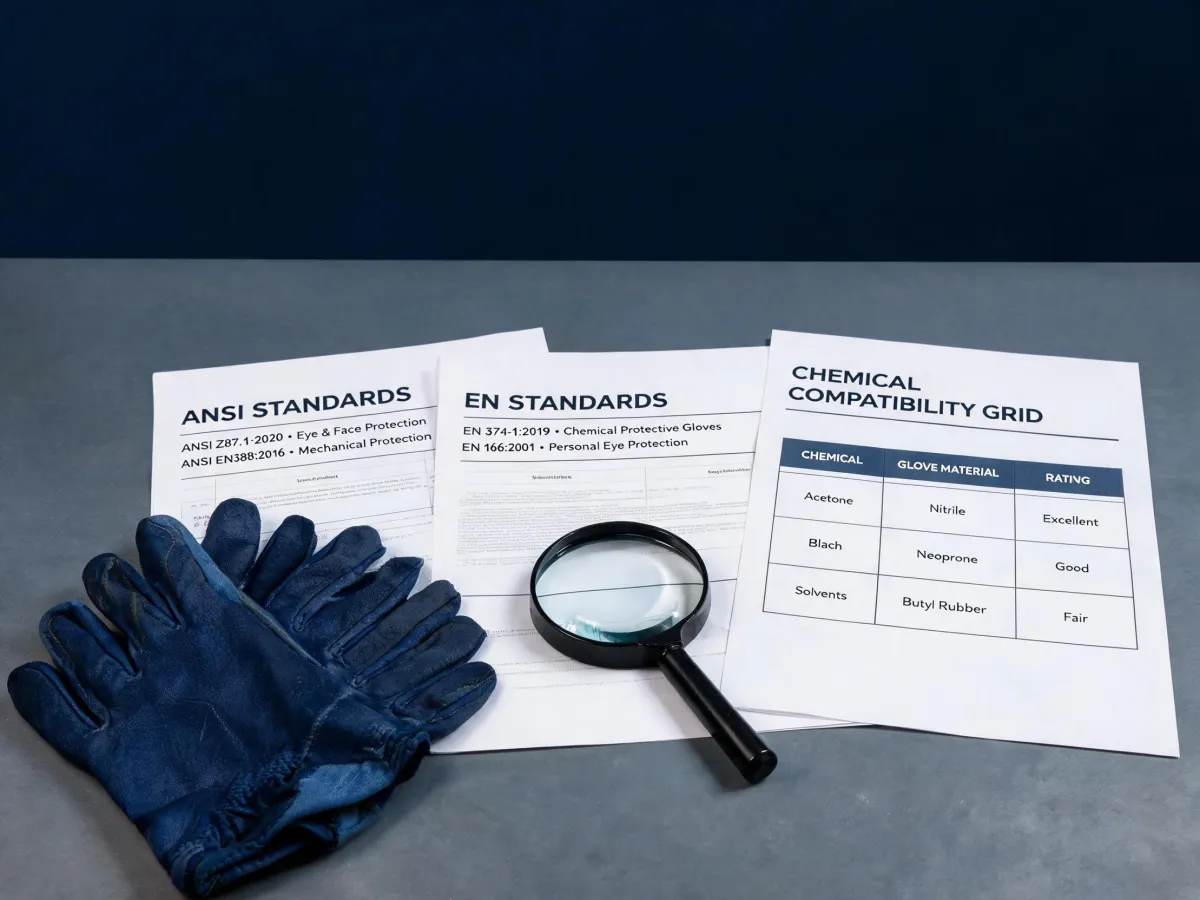
| Standard | Scope | Use in review | Evidence to request |
|---|---|---|---|
| ANSI/ISEA 105-2016 | Cut, puncture, abrasion and heat references | Compare A1-A9 cut levels to the task hazard | Product datasheet and test summary |
| EN 388:2016+A1:2018 | Mechanical risks for protective gloves | Review abrasion, blade cut, tear, puncture and TDM cut values | Marking explanation and score basis |
| EN ISO 374-1:2016 | Chemical risks and microorganisms | Screen glove families by chemical contact scenario | Chemical guidance and use limitation notes |
| EN 16350:2014 | Electrostatic properties | Review ESD-sensitive work areas | Surface resistance documentation |
How to compare cut ratings without treating different test methods as identical.
Why contact time, concentration and temperature matter before a glove family is approved.
How hygiene rules, accelerator sensitivity and changeout intervals affect total program cost.
Request documents for nitrile disposable gloves, chemical resistant gloves, foam nitrile coated work gloves, cut resistant liners and specialty clean handling styles. The library keeps approval and compliance terminology separate: OSHA regulations apply to workplace obligations, while product claims must be supported by the relevant product documentation.
Can one coated glove cover both oily handling and sharp edge work? Which trial notes prove operators can keep the glove on for the whole job? When does a chemical splash task need a different glove than short incidental contact? How should a buyer record a substitution when the preferred size is unavailable? These are specification questions, not slogan questions, and the technical library is structured accordingly.
Send the marking, product family, chemical or task. We will help frame the next technical review.
Request Engineering Review