
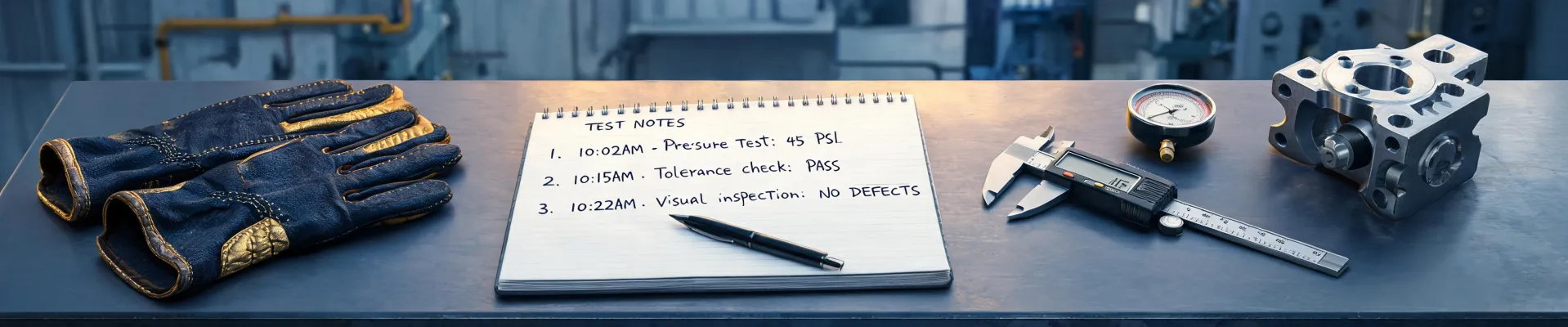
If I could change one thing about how safety managers buy PPE, it would be this: stop treating price as the starting point. I'm a quality compliance manager. I review every glove and boot line that goes through our warehouse—roughly 200 unique items each year, and I check batch-level spec compliance before anything ships. In Q1 2024 alone, I rejected 6% of first deliveries because the product didn't match the documented specification. In almost every case, the buyer had gone with a cheaper 'equivalent.'
I don't care what brand a box says. I care whether the batch still meets spec when I measure it. But if you're asking what I'd pick when a deadline is tight and a hand is exposed to chemicals, I'll pick Showa gloves more often than not.
Here's my opinion in one sentence: In PPE, you aren't paying for a brand name. You're paying for certainty that the protection on the label is actually on your hand or your foot.
Why Showa Gloves Keep Making My Approved List
When someone asks me about Showa gloves, I don't automatically say yes. I've had enough bad batches from every manufacturer—including Showa—to know that a brand name is not a guarantee. What sets Showa apart in my experience is consistency. The Showa 377 nitrile gloves, for example, show up on our chemical-handling spec sheets for a simple reason: the nitrile formulation is uniform across lots. We measure thickness at the palm and fingers from random samples. The Showa 377 nitrile gloves we tested in July 2024 stayed within 0.01 mm of the declared thickness. The generic 'equivalent' we compared them to varied by 0.06 mm across a single box.
That doesn't mean other gloves are bad. It does mean that when a worker is reaching into solvent, I'd rather rely on a tested formulation than a supplier's promise.
Last year, the numbers said go with a different brand: 15% cheaper, same cut resistance rating, same nitrile material. My gut said stick with Showa. I went with my gut. Six months later, that other brand had a contamination issue and issued a recall. I can't claim my gut detected the contamination specifically, but it had registered enough small inconsistencies to make me trust the data less than the glove I'd seen perform.
What Showa Gloves Actually Buy You: Time Certainty
Rush orders are where this really shows up. In March 2024, we paid a 20% expedite fee for a Showa order because a client had an environmental audit scheduled. The alternative was a vendor who promised 'probably' three days. The client would have lost their audit slot. That sunk cost would have been far larger than any expedite fee.
I had about two hours to decide. Normally I'd get three quotes. That wasn't an option. I went with the distributor who had the actual lot in stock and could show me the inspection certificate. That's the difference between 'can ship' and 'will arrive and meet spec.'
Boots: Composite Toe, Chelsea Style, and the Wolverine Question
The same logic applies to what you put on your feet. Let's deal with the obvious question first: are wolverine work boots good? I think they are a legitimate choice for many jobs. Their composite toe work boots meet impact and compression requirements under ASTM F2413-18, and for general warehouse, construction, and maintenance work, they do what they're supposed to do. Are they the most specialized boot you'll find? No. There is no universal best boot. There is only the right boot for a specific hazard.
Composite toe work boots are what I recommend when workers are on their feet all day and weight matters. Steel toes are heavier. Composite toes don't conduct cold as much, and they clear metal detectors. But the toe material matters less than whether the boot was actually tested. If someone says 'composite toe' but can't produce the ASTM F2413-18 mark, don't buy it.
Mens Chelsea work boots are another style that keeps coming up. They're popular because they're easy to pull on and off—maintenance teams, mechanics, people who move between the shop floor and the office. For those environments, a Chelsea boot is often more comfortable than laced footwear. The trade-off is fit. Without laces, you need a snug heel and enough room in the toe box. I've seen workers buy a Chelsea style half a size too long because they compared it to athletic shoes. That's how you end up with blisters, and worse, a boot that doesn't stay on during an impact.
The Counterargument: 'But the Cheap Pair Has the Same Marking'
I hear this from procurement every quarter. 'It has the same EN 388 rating. It's the same nitrile. Why pay more?' I understand. Budget pressure is real. But in Q3 2024, we tested four brands of supposedly identical nitrile gloves. One failed puncture resistance by 18%. The other three met the minimum, but only one maintained the same performance level after accelerated aging. That one was Showa 377.
Let me rephrase what I'm really saying: a certification mark is not a performance guarantee. It's proof that a sample passed a test. If the manufacturer changes the compound, the mark can still be the same. That's why I always ask for lot-specific test reports. If a supplier can't provide them, the product is not equivalent until proven otherwise.
One of my biggest regrets happened when I approved a 'comparable' glove without asking for the full test report. It had the same markings. It looked fine. The first field report came back with a worker's hand coated in hydraulic oil—the glove had softened and leaked after 15 minutes. We had to redo the entire safety assessment and replace every unit. That mistake cost us about $22,000 in time, shipping, and credibility. I still kick myself.
Now every contract I review includes a line requiring lot-level test data and an approved sample. It costs nothing to ask. It prevents disasters.
Last month, I dodged a bullet when I double-checked a grey-market listing for Showa gloves. The photos showed the right box, but the lot number had been discontinued. The seller couldn't produce a test report, so I walked away. That near-miss reminded me exactly why I added that contract line.
What I Actually Recommend You Verify
- For Showa gloves, including the Showa 377 nitrile gloves: check the lot code on the box and ask for the corresponding EN 388 (mechanical), EN 374 (chemical), or ANSI/ISEA test report. Match glove length, thickness, and cuff style to the task.
- For composite toe work boots: confirm the ASTM F2413-18 marking on the boot itself. Check heel and toe clearance while kneeling and climbing stairs—not just while standing.
- For mens Chelsea work boots: make sure the heel locks in place. No laces doesn't mean no fit. Try them with the socks you'll actually wear.
I'll also add this: buy Showa gloves from an authorized distributor, not an online marketplace. Grey-market gloves may look identical and fail at the worst moment.
My Bottom Line
I should add that I don't have a financial arrangement with Showa. My bias comes from test reports, not marketing. If another brand beats them in a lot-level audit, I'll buy that brand instead.
I don't have loyalty to brands. I have loyalty to verified performance. If someone shows me a cheaper glove or boot that passes the same lot-level requirements, I'll switch in a day. Until then, I'll keep specifying Showa gloves for the applications where I've watched them perform, and I'll choose composite toe work boots based on the ASTM mark instead of the logo. That's not stubbornness. It's math: the cost of failure is so much higher than the cost of certainty.
And for the record, Wolverine? Yes, they're good for what they are. Just make sure it's the right boot for your hazard assessment.

Maeve Callahan
Maeve Callahan is a head-protection analyst covering Type I and Type II hard hats, climbing-style safety helmets, bump caps, chin straps, suspensions, liners, and face-shield carriers. She applies ANSI Z89.1, EN 397, and EN 12492 criteria while comparing impact attenuation, penetration resistance, lateral deformation, electrical class, retention strength, field of vision, mass, fit range, and temperature conditioning. Her guides help EHS teams, contractors, utilities, and buyers select helmet systems for overhead hazards, work at height, electrical exposure, accessory compatibility, and worker acceptance.
Leave a Technical Comment