
I keep a returned pair of brown leather work boots in my office. Not for decoration — they're a teaching tool.
Steel toe, six months old, waterproof according to the box. The customer sent them back with a note that read, "These are defective." On paper, they weren't. Every specification was within tolerance. The safety toe passed its ASTM rating. The sole was intact. The leather hadn't split. But the man who wore them had a point that didn't fit on a return form — the boots were starting to stink, and he'd only had them for a season.
That pair, and about a dozen like it, is why I've spent the last six years arguing with sales reps about specifications instead of decorations. I'm a quality and compliance manager at an industrial supply company. I review every footwear and PPE line before it hits our catalog — roughly 200 SKUs a year across three warehouses. In 2024, I rejected 18% of first deliveries. Most of them weren't dangerous. They were just "fine" — and "fine" is how you end up with a returned boot that smells like a basement.
Here's what I've learned: most work boot complaints are not boot problems. They're spec problems. And the fix is rarely "buy the expensive one" or "buy the cheap one." It's buying correctly.
The Problem You Notice First
Ask a crew what's wrong with their boots and you'll hear the same three things on repeat:
- "They stink."
- "They fell apart early."
- "They're not comfortable anymore."
Those aren't three problems. They're three symptoms of one thing: moisture that never got managed.
The instinct is to treat stink as a maintenance issue. Buy powder. Stuff cedar in them. Give them a weekend to air out. It's tempting to think a $12 anti-odor insert solves the problem. But by the time your boots smell, the lining has already absorbed months of sweat and the insole has started to break down. The smell is the last thing to show up, not the first.
And "fell apart early"? Usually the same story. A cheap lining fails after six months of trapped moisture. A "waterproof" membrane that doesn't breathe traps sweat against the foot. The sole is fine — the inside of the boot is gone.
What's Actually Going On
Moisture is a spec, not a nuisance
This is the part that took me the longest to appreciate. A boot's ability to manage sweat isn't a comfort feature you add later. It's a material and construction spec, and it's decided before the boot leaves the factory.
Three things drive it:
- The lining. Mesh and moisture-wicking textiles move sweat away from the foot. Cheap non-woven linings don't — they hold it.
- The membrane. A waterproof membrane is only useful if it's breathable. A non-breathable liner turns your boot into a plastic bag with a steel toe.
- The insole. A removable, moisture-managing insole is replaceable. A glued-in foam insole is not — once it's waterlogged, the boot is done.
When I spec a boot for a client's workforce, I don't start with the style. I start with the lining and the insole construction. That's not glamorous. It's the difference between a pair that lasts two seasons and a pair that gets returned in five months. (Note to self: we still haven't added a lining-check to the factory audit form — I really should fix that this quarter.)
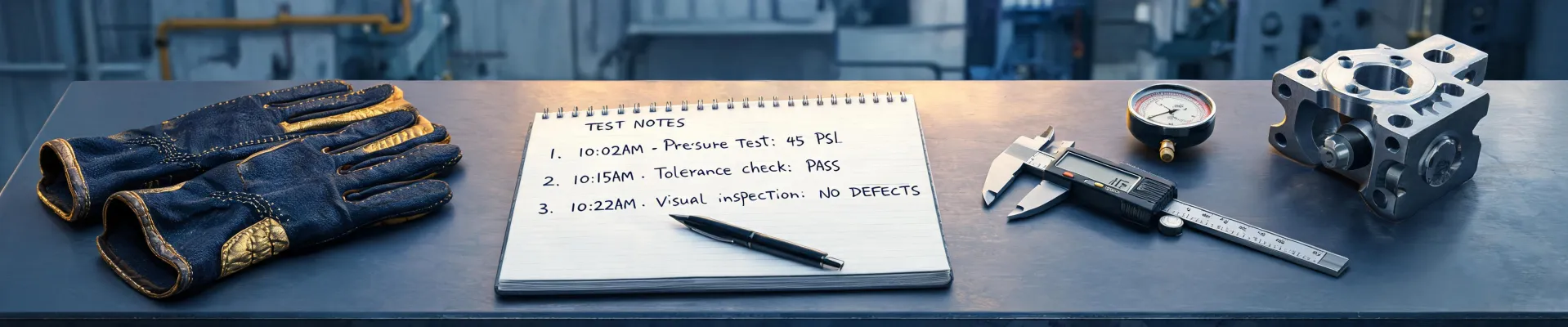
"Waterproof" is also a claim, not a marketing word. Per FTC guidance on advertising substantiation, any waterproof claim has to hold up — and as of January 2025, our own internal protocol is a 20-PSI, 30-minute leak test on every waterproof SKU. A run that fails at the membrane seal is the fastest way to get me on a call with a vendor.
The unit price trap
Here's where I'll disagree with a lot of procurement people. The cheapest quote is almost never the lowest cost — and I've got the rejection log to prove it.
I went back and forth between an established vendor and a new one for two weeks on our steel toe line. The established vendor offered reliability and a known lead time; the new one offered roughly 25% savings and a flashier spec sheet. Ultimately I chose reliability, because the account was a 400-person contractor and I couldn't afford a first-year failure. Granted, the savings were real. But a single batch of warped toe caps in Q1 of 2023 cost us $22,000 in reshipment and credits — more than the new vendor's annual discount would have saved us.
It's tempting to think you can just compare unit prices across vendors. But two boots with identical-looking specs can behave completely differently in a wet warehouse, and the one that fails early costs you more than the one that didn't.
I ran the math on a client's 60-person crew last year:
- Cheap boot: about $75 a pair, average replacement every 7 months.
- Better-spec'd boot: about $165 a pair, average replacement every 24 months.
Over three years, the cheap boot runs about $386 per worker in replacements — before you count the lost hours from a guy going home early because his boots are soaked. The better boot runs about $247. That's a $139 per-worker difference, and that's before compliance costs.
I get why people go with the cheapest option — budgets are real, and a $75 boot is easier to justify on a spreadsheet. But the spreadsheet is hiding the second purchase, and the third, and the fourth.
The steel toe vs composite toe debate isn't the real debate
Steel versus composite is a real conversation, but it's often a distraction from the larger spec question. Both pass ASTM F2413-18. Both protect the foot. The difference is weight, thermal transfer, and fit — and fit is where steel toe Wolverine work boots for men either work or they don't.
I've seen crews reject composite toe boots they swore they wanted because the last was too narrow in the toe box. I've seen a crew of linemen love a steel toe boot they'd spent years avoiding, because the fit was finally right. The material matters less than whether the foot actually fits without pinching, sliding, or sweating through a 10-hour shift.
People ask me about Doc Martens work boots the same way they ask about any crossover line — is it a real work boot, or a fashion boot with a hard sole? The honest answer is that it depends on the specific model's certification. A boot that carries an ASTM rating and a proper lining can work in light industrial settings. The same silhouette without the rating is a casual boot with a tough reputation. The certification is what you're buying, not the brand mythology.
What This Actually Costs You
I keep a spreadsheet of every rejection. Some numbers from 2024:
- Rework and credit. The Q1 waterproof recall — 140 pairs shipped back after a failed leak test — cost us $22,000 in reshipment and credits. The boots retailed at $140. The real cost was in logistics and trust.
- Worker downtime. A crew with the wrong moisture spec loses a couple of hours per person per week to wet-feet breaks, sock changes, and the slow misery of working in boots that feel like buckets.
- Compliance. OSHA 29 CFR 1910.132 requires employers to provide PPE that fits properly and is maintained in a sanitary condition. "Sanitary" is not a suggestion. A boot that stinks is a boot that's hard to keep sanitary, and an inspector is allowed to notice.
And then there's the thing you can't put on a spreadsheet: the guy who stops trusting your PPE decisions. Once a crew decides the boots you picked are "the bad ones," every subsequent order is a negotiation. That trust is expensive to rebuild.
What Actually Works
The fix is not a cheaper boot. It's a correct one.
Spec moisture, not just style. When you're evaluating Wolverine men's waterproof work boots or any other line, look at the lining, the membrane, and whether the insole is removable. If it isn't, assume a six-month lifespan in a wet environment. Wolverine boots have been on job sites long enough that they show up in every spec conversation I have — they're not automatically the right answer, but they're a fair example of what a properly documented line looks like.
Buy for cost-per-wear, not unit price. A $165 boot that lasts 24 months beats a $75 boot that lasts 7. Every time. Run the math before you sign the PO.
Rotate pairs when you can. Two pairs worn on alternate days last more than twice as long as one pair worn daily — the moisture has time to dry out.
On "how to make work boots not stink": the honest answer is you mostly prevent it. You don't fix it. Pull the insole and dry it separately. Alternate pairs. Change socks mid-shift in hot weather. Use a boot dryer, not a radiator. Once the lining is saturated and sour, no powder is bringing it back. I've tried — fairly stubbornly, actually, on my own pair.
And a note on the brown leather gloves in the same kit: the logic is identical. A cheap glove that fails in three weeks is more expensive than a good one that lasts a season, and the hand inside it cares about the moisture spec just as much as the foot does. We spec gloves with the same lining-and-fit review we use for boots now. Took us longer than it should have to make that a rule.
I'm not arguing the most expensive boot is always the right call. A well-specified mid-priced boot, worn in rotation and dried properly, will often outlast a premium boot used as a daily driver with no care. To be fair, the premium lines earn their price in certain environments — heavy concrete, wet clay, long shifts. But the deciding factor isn't the logo. It's the spec.
So when someone asks me why their work boots stink, I don't hand them a powder. I ask what the lining is made of. Usually, that's the whole conversation.

Omar Ben Salem
Omar Ben Salem is a traffic and facility-safety analyst covering traffic cones, delineators, barricades, bollards, guardrails, floor-marking tape, safety signs, convex mirrors, wheel chocks, and pedestrian barriers. He applies ANSI Z535 and ASTM F3016 criteria while comparing sign format, viewing distance, color contrast, retroreflectivity, wind stability, impact rating, barrier geometry, anchorage, floor adhesion, turning clearance, and traffic separation. His work helps warehouses, construction sites, logistics yards, municipalities, and facility planners organize vehicle routes, pedestrian zones, temporary work areas, hazard communication, loading operations, and physical protection priorities.
Leave a Technical Comment