
-
The Mistakes I Made So You Don't Have To
-
Step 1: Identify the Hazard Before You Look at Any Product
-
Step 2: Match the Standard to the Task, Not the Marketing
-
Step 3: Read the Material Spec Sheet Like Your Budget Depends On It
-
Step 4: Remember That Your Workers Wear More Than Gloves
-
Step 5: Test Before You Scale — Every Single Time
-
Step 6: Check the Size Chart Against Real Hands (and Feet)
-
Step 7: Build the Documentation You Wish You Had
- Common Mistakes That Still Happen Even With a Checklist
-
Final Notes
The Mistakes I Made So You Don't Have To
I'm a safety procurement specialist and I've been handling PPE orders for 6 years. During that time, I've personally made (and documented) 14 significant mistakes, totaling roughly $15,800 in wasted budget. This checklist is the one I wish someone handed me on my first day.
If you're a safety manager, procurement professional, or a small business owner who buys industrial hand and foot protection, these 7 steps will keep you from repeating the most expensive errors I made.
Step 1: Identify the Hazard Before You Look at Any Product
In my first year (2019), I made the classic mistake: I ordered a batch of cut-resistant gloves for our assembly team, confident in the brand name. What I didn't verify was whether those gloves addressed the actual hazard — chemical exposure during parts cleaning, not cutting.
We didn't catch it until the crew reported skin irritation two weeks in. $1,850 worth of gloves, straight to the trash. The chemicals were degrading the glove material (in other words, the gloves were never rated for that exposure in the first place).
Before you open a catalog or browse any product page, write down:
- The specific hazard: cuts, chemicals, heat, arc flash, abrasion — name it precisely
- Exposure duration: a few minutes per task or the entire shift
- The worst-case outcome if the glove fails
Step 2: Match the Standard to the Task, Not the Marketing
This is where a lot of buyers get tripped up. Product pages say things like "level 5 cut resistance" without telling you which standard they're referencing. That's kinda like saying a car is "fast" without telling you the horsepower.
Know the standards that apply to your industry:
- Cut resistance: ANSI/ISEA 105-2016 — levels A1 through A9. Don't compare these directly to the old 1-5 scale from the 2011 edition; they're different systems.
- Chemical resistance: ASTM D6978 — tests permeation, not just surface penetration.
- Arc flash: NFPA 70E — the glove's arc rating must exceed the incident energy level in your specific hazard analysis.
- Hand protection baseline: OSHA 29 CFR 1910.138 requires selecting gloves appropriate for the task and conditions of use.
My September 2022 disaster is the cautionary tale here. I ordered Showa arc flash gloves for our electrical maintenance crew, confident they matched the hazard analysis. They didn't. The incident energy at our facility exceeded what those gloves were rated to handle. $2,400 wasted, a 3-week delay, and a very uncomfortable conversation with the safety director. (Note to self: never again order arc-rated PPE without the hazard assessment sitting right next to me.)
The fundamentals haven't changed — you still match protection to hazard. But the execution has transformed. In 2025, manufacturers publish more detailed test data than ever before, so there's no excuse for guessing.
Step 3: Read the Material Spec Sheet Like Your Budget Depends On It
When I compared our Q1 and Q2 orders side by side back in 2021 — same glove style, different material composition — I finally understood why the fine print matters so much. The gloves looked identical. The price was nearly identical. One version was accelerator-free; the other wasn't. For workers with sensitive skin, that difference was the entire story.
Things to verify on every glove spec sheet:
- Material composition: nitrile, latex, neoprene, or a blend — don't assume "nitrile" behaves the same across manufacturers
- Accelerator-free construction (meaning no chemical accelerators used in manufacturing) — increasingly a standard RFQ requirement in industrial settings
- Grip pattern and coating: dry vs. wet vs. oily environments change which glove actually works
- Length and cuff style: snug-fit cuffs for fine work, gauntlet cuffs for chemical handling
- Biodegradability claims: a newer factor but growing in priority, especially for companies with sustainability targets
Some products are easy to dismiss because they're positioned for a "simpler" use case. The Showa Atlas 370 garden nitrile gloves are a good example — on paper they're "garden gloves," but the nitrile coating handles wet conditions and minor puncture risk surprisingly well. Not a replacement for chemical-rated gloves, but a legitimate option for light industrial tasks if the hazard assessment supports it. Just don't buy them for heavy chemical work because the name is famous. The name isn't the spec.
Step 4: Remember That Your Workers Wear More Than Gloves
I don't have hard data on how many safety programs have a hand-foot protection gap, but based on six years of facility walkthroughs, my sense is it's more than half. It's easy to obsess over one category and forget that your crew has feet too.
In 2023, we overhauled our hand protection. Great gloves, everyone happy. Then an employee dropped a steel beam on his foot, and we realized the foot protection policy hadn't been updated in years. (I really should have caught that earlier.)
OSHA 29 CFR 1910.136 requires protective footwear for employees exposed to foot injuries — that's a federal baseline, not a suggestion. The same hazard-first logic applies to boots as it does to gloves.
For general industrial use, brands like Brunt work boots are worth considering for durability and value. But again: hazard first. A standard boot won't cut it if the job requires an electrical hazard (EH) rating, metatarsal guards, or puncture-resistant soles.
And if you're buying for a family farm or a workshop with younger workers, don't overlook the smaller feet in the room. Kids' work boots need to meet the same safety standards as adult versions. A scaled-down boot without the proper rating is just a smaller hazard.
Step 5: Test Before You Scale — Every Single Time
After the third rejected order in Q1 2024, I created this checklist. The pattern was always the same: place a large volume order based on a product page, then discover the mismatch on day one when the crew starts working in them.
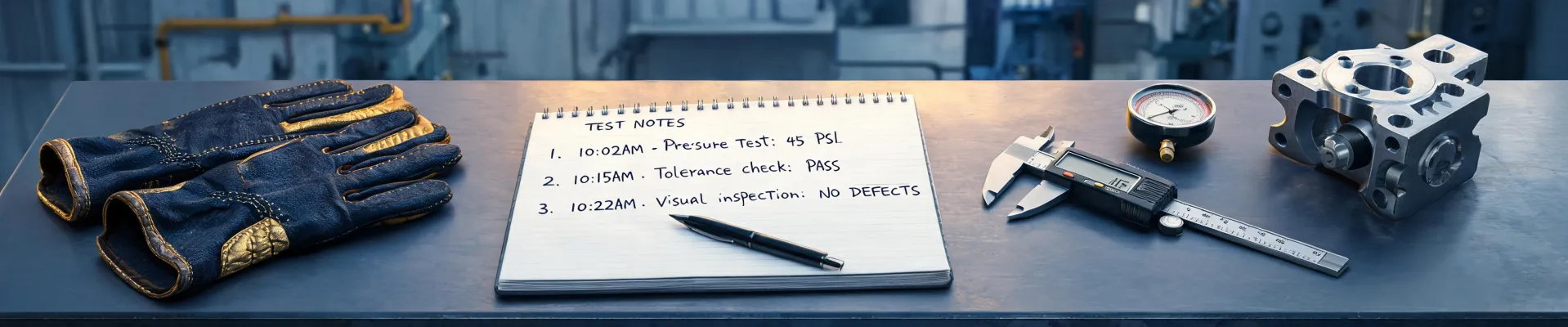
The fix is embarrassingly simple. Request samples first. Most reputable manufacturers and distributors will send them for a nominal fee or even free. Test with the actual workers, in the actual environment, for a few shifts. Then order in bulk.
Sample costs: $50-100 in shipping and coordination time. Bulk order mistakes: $1,000 to $5,000 per incident. Do the math.
Step 6: Check the Size Chart Against Real Hands (and Feet)
This sounds too basic to be on a list of costly mistakes, but it absolutely belongs here. In 2022, we received a bulk order of Showa gloves and the fit was wrong — the manufacturer's medium ran closer to a large. Nothing was defective. The sizing scale was just calibrated differently from what our crew was used to.
Result: $700 in return shipping and a full week of workers grabbing whatever pair fit loosely. That week included one minor hand injury that probably wouldn't have happened with properly fitted gloves.
Always: print the size chart, measure representative hands (and feet for boot orders), and compare with your current PPE inventory before committing to a bulk order.
Step 7: Build the Documentation You Wish You Had
What was best practice in 2020 may not apply in 2025. The industry is evolving — biodegradable materials, improved accelerator-free formulations, more precise testing, stricter supply chain scrutiny. The fundamentals haven't changed, but the execution has transformed.
The documentation you leave behind is the most valuable thing you can hand to whoever takes over your purchasing role. Keep a running record of:
- Which products worked, which failed, and why
- The hazard assessment for each role (and its revision date)
- Vendor lead times and responsiveness
- The rationale for every deviation from standard practice
Common Mistakes That Still Happen Even With a Checklist
Ignoring Moisture Management
We had an entire crew complain about foot irritation before we realized it was moisture-related, not boot-related. If you're wondering how to keep feet dry in work boots, the answer starts with choosing boots that have breathable, moisture-wicking liners, wearing synthetic or wool socks (not cotton), and rotating between two pairs so they can fully dry. This isn't a comfort nicety — it's a safety issue. Chronic moisture leads to blisters, blisters lead to altered walking patterns, and altered walking patterns lead to bigger injuries.
Assuming "Light Duty" Means "Low Stakes"
Light-duty tasks still involve real hazards. I've watched people order thin gloves for "quick work" and then act surprised when a sharp edge or chemical splash showed up. Even the Showa Atlas 370, a glove I genuinely rate for dry-grip performance, has limits. No glove is a universal solution. And no boot is either.
Letting a Brand Name Do the Thinking
I've been guilty of this more times than I'd like to admit. A recognizable brand — Showa included — doesn't mean the specific product fits your specific hazard. That's not an anti-brand stance; it's a pro-verification stance.
Final Notes
Five years ago, "accelerator-free" was a niche request in RFQs. Now it's a standard line item across many industries. Buyers who build processes — not just purchase orders — are the ones who keep up.
Pricing and product specs change frequently. Verify current rates and certifications with your supplier before ordering; this article reflects my experience as of March 2025. The steps are what matter: identify, verify, test, document.
I wish someone had handed me this checklist in 2019. It would've saved me $15,800 and a lot of awkward conversations. If it saves you even one of those, it's done its job.

Maeve Callahan
Maeve Callahan is a head-protection analyst covering Type I and Type II hard hats, climbing-style safety helmets, bump caps, chin straps, suspensions, liners, and face-shield carriers. She applies ANSI Z89.1, EN 397, and EN 12492 criteria while comparing impact attenuation, penetration resistance, lateral deformation, electrical class, retention strength, field of vision, mass, fit range, and temperature conditioning. Her guides help EHS teams, contractors, utilities, and buyers select helmet systems for overhead hazards, work at height, electrical exposure, accessory compatibility, and worker acceptance.
Leave a Technical Comment