
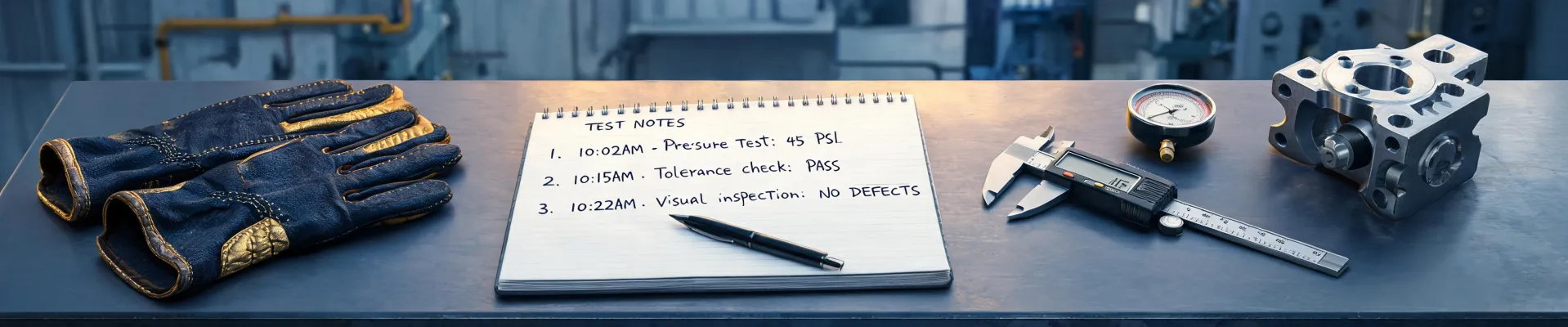
Last January, I stood in our warehouse holding a bin of gloves that had failed in less than two shifts. The budget spreadsheet said we'd spent 31% less on hand protection than the previous year. The foreman called it 'false economy.' He was right. We were buying more replacement gloves, losing more labor hours, and paying for it in ways the P&L didn't show.
For context, I'm an office administrator for a 300-person manufacturing company. I manage all PPE ordering—roughly $60,000 annually across 8 vendors. I report to both operations and finance. When I took over purchasing in 2020, I inherited a system built around one question: what's the lowest price?
The 2024 Vendor Consolidation Project
In 2024, finance asked me to consolidate those 8 vendors down to 4. The goal was simple: cut administrative overhead and use our buying power better. I sent the same product list to four national safety distributors and one regional supplier. The quotes varied by nearly 40% for equivalent line items. The lowest bid was from a company we'd never used. They were 38% cheaper on disposable gloves and 22% cheaper on safety goggles. I was tempted. Who wouldn't be?
Then I asked for documentation. The email I got back listed 'similar' product names instead of actual model numbers. No ANSI/ISEA 105 cut-resistance rating. No ANSI Z87.1 marking on the goggles. When I asked about invoicing, they mentioned a handwritten receipt if we wanted the discount. That was a hard no. In 2021, a vendor with bad invoicing cost us $2,400 in rejected expenses. I'm not reliving that.
So we ran a short field trial instead. I want to say it lasted 12 working days, but don't quote me on that. The maintenance supervisor set up stations in two areas: fabrication and light assembly. We tested the low bid product, our existing glove, and Showa gloves head-to-head.
The Showa black nitrile gloves—we tested the 377s and 381s for general handling—held up for an average of five full shifts. The low bid gloves didn't last one complete shift. They tore at the cuffs and left black dye on workers' wrists. The Showa gloves didn't. They also had a textured grip that actually worked on oily parts. According to the ANSI/ISEA 105 cut-resistance scale, Showa publishes the rating for each glove, so I could compare products directly. That should be table stakes, but it wasn't.
For the assembly line, I specifically asked for samples of Showa biodegradable nitrile gloves. We ended up standardizing on the 7500PF. They're accelerator-free, thin enough to handle small parts, and the dermatitis complaints that followed the old disposables basically stopped. The biodegradable part is a benefit, but it's not why we chose them. We chose them because they performed.
We also looked at the N-Dex line and the 6110PF for precision work. To be honest, Showa's catalog is deep, and that's one reason I trusted them. I didn't have to improvise with 'good enough' substitutes.
Beyond Gloves: Goggles and Boots
The same logic applied to other PPE. Our old safety goggles were unmarked, scratched, and fogged every time someone walked from the dock into the conditioned warehouse. We replaced them with ANSI Z87.1-rated safety goggles with anti-fog coating. They cost more per pair, but the number of 'I can't see' complaints dropped to zero. That's worth something.
Boots were a separate project, but connected. The maintenance team had been buying $49 boots from the big box store and replacing them every five months. After foot pain complaints, we tested Brunt work boots with three technicians. Ten months later, two of them were still wearing the same pair. The upfront cost was higher, but the monthly cost was either the same or better.
That's also when I learned how to break in leather work boots. One new tech got blisters on day three and wanted to return them. I felt the same way with my first pair. I put together a one-page guide on how to break in leather work boots: wear them in two-hour sessions, use leather conditioner, and let them dry naturally after a wet shift. No shortcuts. It sounds basic, but it kept the boots from going to the back of the locker room.
The Real Math
The low bid looked like it would save about $8,400 off the initial quote. That's a real number at a budget review. But the field trial showed we'd be reordering disposable gloves at least twice as often. The labor cost of stopping a line to deal with a torn glove is higher than the glove cost. Add in the risk of hand injuries and rejected shipments, and the savings disappeared.
A glove that fails on day one isn't a $0.12 glove. It's a $12.00 problem.
I still compare prices. I still send RFPs. But now I ask a different question: what is the total cost per usable shift, not the cost per pair?
What I'd Do Differently
Even after we approved the Showa order, I kept second-guessing. What if the field trial was a fluke? The two weeks between the PO and the first full pallet arriving were stressful. In hindsight, I should have asked for extra safety stock from our existing supplier during the transition. I also should have brought the new distributor in for a sizing session before the big order.
The bigger mistake was almost letting the low quote cloud the decision. We didn't need fewer vendors. What I mean is we needed fewer vendors who could actually support us. There's a difference.
So glad I pushed for the trial. Had we gone with the lowest bid, I'd still be explaining why the savings turned into reorders and near-miss reports. There's something satisfying about opening the PPE cabinet and seeing gloves that are actually being used. After all the spreadsheets and sample boxes, that's the payoff.
The lesson I keep re-learning after five years of managing these relationships: value is not the same as price. Showa gloves are now our primary hand protection line, but not because they're the only good brand. They publish the standards, they last on the job, and our workers trust them. That trust is worth more than the difference on a purchase order.

Maeve Callahan
Maeve Callahan is a head-protection analyst covering Type I and Type II hard hats, climbing-style safety helmets, bump caps, chin straps, suspensions, liners, and face-shield carriers. She applies ANSI Z89.1, EN 397, and EN 12492 criteria while comparing impact attenuation, penetration resistance, lateral deformation, electrical class, retention strength, field of vision, mass, fit range, and temperature conditioning. Her guides help EHS teams, contractors, utilities, and buyers select helmet systems for overhead hazards, work at height, electrical exposure, accessory compatibility, and worker acceptance.
Leave a Technical Comment