
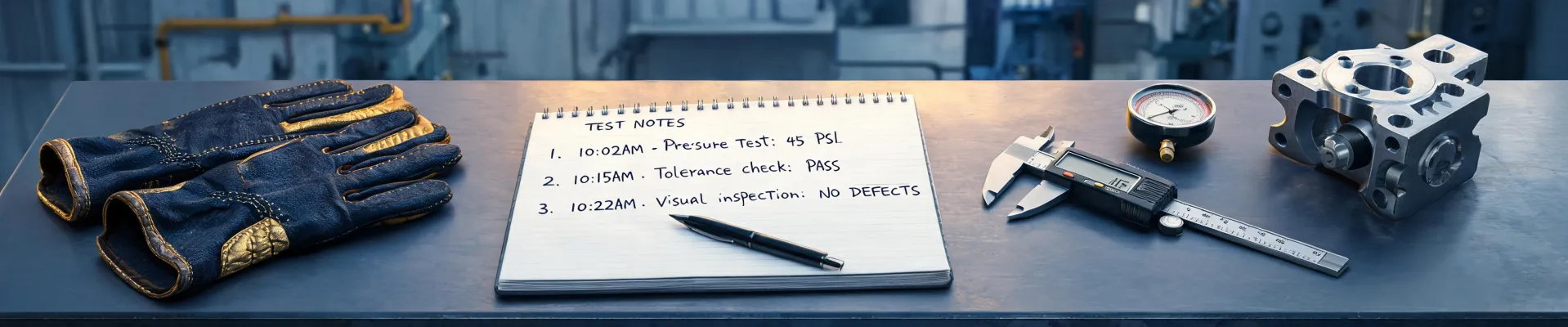
Last October, at 6:30 on a Tuesday, I was standing in our warehouse with a packing slip in one hand and a coffee in the other. Our operations lead had just told me the news: we signed a rush contract, and 12 new crew members needed full PPE in two weeks.
I've been the procurement manager at a 140-person metal fabrication company for six years. I manage a safety budget of about $180,000 a year, and I've negotiated with more than 30 vendors. Every order goes into a cost tracking spreadsheet that finance probably thinks is overkill. That spreadsheet has caught more hidden fees than I can count.
When the rush order came in, I already knew which hand protection I wanted: Showa gloves. Our standard order is Showa 717 nitrile gloves, dozen after dozen, for assembly work, plus Showa cut resistant gloves for anyone handling sharp metal edges.
One vendor's quote, dated October 7, 2024, listed the Showa 717 nitrile gloves dozen price at $14.80. Another vendor came back at $13.90 for a different nitrile glove. That 90-cent difference looks small on paper, but when you multiply it by 12 workers and 52 weeks, it's tempting. I almost took it.
Almost.
Why the cheaper glove wasn't cheaper
The other glove wasn't a no-name. I don't want to pretend Showa is the only brand that works. But the quote had a spec sheet, and I read it slowly. The generic nitrile was thinner, and its EN 388:2016 abrasion rating was lower than the Showa 717. That matters in our shop because we handle coil stock and stamped parts with rough edges. A thinner glove wears through faster. Faster replacement means more orders, more shipping, more downtime.
I learned this the hard way. A few years earlier, I assumed that 'similar' meant 'same' across two glove models. It didn't. Since then, no quote goes into my comparison without a datasheet.
I've documented about 200 PPE orders over the past six years, and this pattern shows up over and over. The glove with the lower invoice price often has a higher cost per hour of protection. I don't need to guess—the replacement cycles show up in the spreadsheet.
Then the hidden fee appeared (ugh). The cheaper vendor was going to ship the nitrile from one warehouse and the cut-resistant gloves from another. Split-shipment fee: $140. That wiped out the 90-cent per dozen saving and then some. We didn't have a rule requiring warehouse location checks on every quote back then. We do now.
Even after all that, I still might have placed the cheap order if delivery were normal. But it wasn't normal. The operations lead needed the whole order on-site by the following Monday. The Showa distributor could guarantee three-day delivery for an extra $275. The other vendor's rep said 'probably Wednesday or Thursday.' That 'probably' ended the conversation.
The boot order that took a different path
Gloves were only half of the story. Operations also asked if I could find Brunt work boots near me, because two of the new hires had worn them at their last job. I spent an hour searching. No one within 40 miles stocked them. So I called a regional safety supply house and asked for a composite-toe option that met ASTM F2413-18. They suggested a pair of pull on work boots from their house brand.
The pull on work boots didn't look as tough as the lace-up styles, but they were certified, and the crew liked not having laces to replace. One of the new guys asked me how to break in leather work boots after his first two shifts. I gave him the advice an old supervisor gave me: wear them around the house for a few evenings, use thick wool socks, and don't try to do a ten-hour shift on day one. He followed it and was fine. The one who didn't ended up with blisters so bad he missed a Friday.
What the spreadsheet taught me
Looking back, the real mistake would have been choosing the cheaper glove because it was cheaper. That's not a universal 'you get what you pay for' lecture. I've found plenty of overpriced gear that wasn't any better than mid-range alternatives. But in this case, the cheap option's own data sheet was worse, the cheap delivery had no guarantee, and the cheap boot wasn't certified. When a procurement decision is made under pressure, the cheapest line item is often the most expensive one.
I know that sounds kinda backwards for someone whose job is to save money. But I've been burned by 'probably on time' promises before. In Q2 2024, when we switched the distributor for a few supply items, we learned that a confirmed delivery date is worth something real. Since then, I budget rush shipping as a line item when a project is schedule-driven. It's insurance, not waste.
One more caveat: my experience is based on about 200 PPE orders with domestic vendors, almost all for metal fabrication and light assembly. I can't speak to chemical plants, food processing, or international logistics. Your gloves need to match your actual hazards. The same rule applies: compare the rating, the delivery guarantee, and the replacement rate, not just the price.
So glad I paid for that expedited delivery. I was one click away from choosing standard shipping to save the company $275. That would have been a great line item on a report, and a terrible decision for the project. The difference between 'on time' and 'probably on time' is not the same as the difference between two vendors. It's the difference between a schedule you can plan around and a gamble.
Showa gloves were the right call for us. Not because of the name on the box, but because the rating, the quote, and the delivery guarantee all lined up. In a rush, certainty is part of the total cost. If you can absorb the risk, save the money. If you can't, pay for certainty.

Maeve Callahan
Maeve Callahan is a head-protection analyst covering Type I and Type II hard hats, climbing-style safety helmets, bump caps, chin straps, suspensions, liners, and face-shield carriers. She applies ANSI Z89.1, EN 397, and EN 12492 criteria while comparing impact attenuation, penetration resistance, lateral deformation, electrical class, retention strength, field of vision, mass, fit range, and temperature conditioning. Her guides help EHS teams, contractors, utilities, and buyers select helmet systems for overhead hazards, work at height, electrical exposure, accessory compatibility, and worker acceptance.
Leave a Technical Comment