
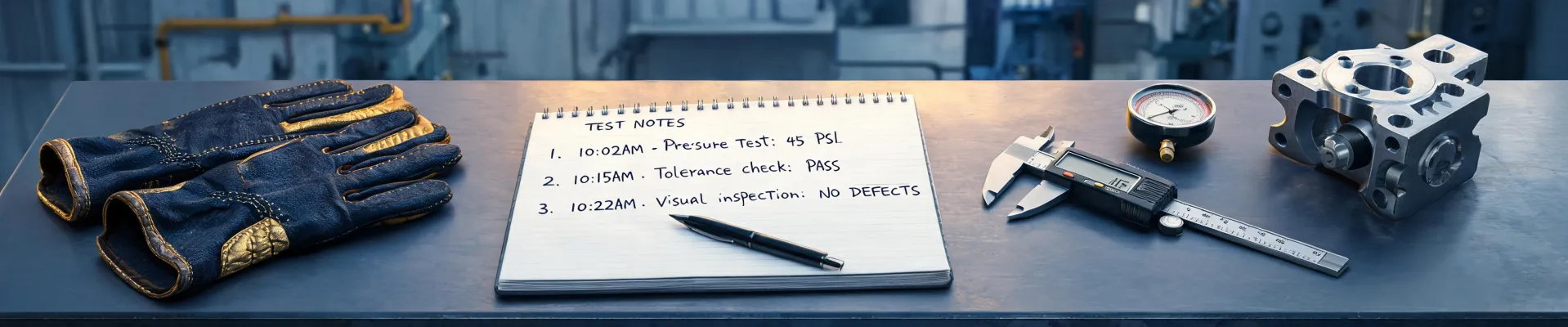
I review safety gloves before they reach customers. Over the last four years, I've inspected tens of thousands of units, rejected about 12% of first deliveries due to spec mismatches, and noticed a pattern that has nothing to do with the gloves themselves: the best hand protection fails when the person wearing it hasn't been trained properly.
So when buyers ask me, "Who is responsible for training workers on the use of PPE?"—and I hear it constantly—the legal answer is straightforward: the employer. OSHA is clear on that. The practical answer is more layered. It depends on your company size, your structure, and whether you share your site with other employers.
There is no one-size-fits-all answer. A lot of content on this subject gives you one generic suggestion and calls it done. That's lazy. The right answer looks different depending on your situation. Here are the three scenarios I see most: a facility with a dedicated EHS team, a small shop with no safety title in sight, and a multi-employer site where contractors work alongside your crew. Find the one that fits.
Scenario 1: You Have a Dedicated EHS Team
If your organization has a safety manager or a compliance officer, the training responsibility typically lands there. OSHA's PPE training requirement is specific:
"The employer shall provide training to each employee who is required by this section to use PPE." — 29 CFR 1910.132(f)(1)
In a large facility, that duty gets delegated. The EHS team designs the program, supervisors reinforce it daily, and HR keeps the records. When it works, it's a clean system.
What I see from the quality side: the companies that nail it treat training as a living process. They retrain when a new glove model arrives. They update the PPE matrix when a new hazard appears on the floor. And they verify that workers actually absorbed the content—not just that they attended the session.
Glove selection plays a supporting role here. Facilities that standardize on a single workhorse model, like the Showa 717 nitrile gloves, tend to have fewer training gaps. When you order them by the dozen and distribute the same model across departments, workers learn one glove. They learn what it can and can't handle. They know when to swap it out. Compare that to a facility with seven glove SKUs on one line, where workers shrug if you ask what each one is for. That's a red flag.
And don't forget the specialized options. If your facility handles chemicals, heat, sharp edges, or electrical work, each hazard demands a different glove and a different training module. Showa's 370 and 377 chemical-resistant models are engineered for specific chemical classes. The 730 series addresses cut risk. The 7500PF arc-flash line meets NFPA 70E requirements for electrical work. Every one of those gloves has its own limitations and change-out triggers. Each one brings a training requirement with it.
The same principle applies to safety glasses. If you issue ANSI Z87.1-rated eyewear, training should cover when to replace them. Scratched lenses, cracked frames, compromised coatings—these are performance issues, not cosmetic ones. Most facilities never teach that. The result is workers wearing eye protection that has quietly stopped protecting.
Scenario 2: Small Shop, No Dedicated Safety Role
This is where most Showa buyers actually live. You're the owner, the purchasing manager, the HR department, and the safety officer all at once. To be fair, most owners mean well. They just don't have a spare hour for training.
Here's the uncomfortable truth: OSHA doesn't care how many hats you wear. You are the employer. The responsibility is yours. Does that mean you personally have to stand in front of a whiteboard every week? No. But you do need to designate someone competent—a senior worker who knows the hazards and has the authority to correct unsafe behavior on the spot. That person handles the training. The owner owns the outcome.
The mistake I see most often in small shops is treating disposable gloves like a scarce resource. In a Q1 audit this year, I watched a worker peel off a nitrile glove, rest it on a dirty workbench, and put it back on twenty minutes later. When I asked why, he said he was "saving money." That glove was contaminated by then. If the shop's work involved anything beyond light assembly, he'd have been exposed. The irony? Showa 717 nitrile gloves cost pennies per pair when bought by the dozen. The economical choice is to use a fresh pair. Reusing a contaminated one is false economy.
Speaking of that model, let me answer a question I get weekly: what are the Showa best nitrile gloves for general industry? In my opinion, the 717. It handles oils, mild chemicals, and abrasion better than latex or vinyl, and the dexterity is good enough that workers won't pull them off just to do fine work. When you buy them by the dozen, you also remove the psychological barrier. Fresh gloves are always within reach. Workers don't ration them.
I had a rush order a while back—a customer's production line was down, their regular glove shipment was stuck in transit, and I had two hours to recommend a replacement. Normally I'd pull spec sheets, compare chemical-resistance charts, and run through ANSI ratings. There was no time. I went with the 717s because years of testing told me they're forgiving across a wide range of tasks. The customer got a glove that worked. The lesson? It helps to have a baseline you trust when you can't do a full review. But that's the exception, not the rule.
Scenario 3: Multi-Employer Sites and Contractors
This is the scenario that surprises most people. If you run a facility where outside contractors come and go, each employer is responsible for training their own workers. But the host employer—the company that controls the site—can also be held responsible for hazards that affect contract workers. OSHA's multi-employer citation policy makes that explicit. If you ask me, it's the most overlooked responsibility in this conversation.
I walked a chemical facility once where a black metal fence surrounded the mixing area. Solid barrier. Clearly marked. The problem was inside it: a contract worker was moving drums without chemical-resistant gloves. His own company had trained him—his certification card said so. But that training didn't match the hazard in front of him, and the host employer hadn't checked. Two layers of responsibility failed at the same time. The fence stopped foot traffic. It didn't stop the chemical exposure happening behind it.
Proper hand protection for chemical work starts with matching the glove to the specific chemical, not to a generic label like "chemical-resistant." That's where Showa's specialist lines come in. The 370 and 377 models are designed for different chemical classes, and the correct choice depends on what you're handling, the concentration, and contact time. If you're a host employer, verify that contractors' training actually covers your site-specific hazards. Ask for training records. Spot-check glove use. It takes ten minutes a week, and it closes the gap between "they said they trained him" and "he understands the risk."
How to Tell Which Scenario You're In
Still not sure? Work through these three questions honestly:
- Who owns safety in your organization? If nobody has "safety" or "compliance" in their job title, you're in Scenario 2, even if you have fifty employees.
- Do outside contractors work on your site? If yes, you carry Scenario 3 obligations, whether or not you've acknowledged them.
- Can your workers demonstrate correct glove doffing right now? If you're not sure, that's a training gap. And a training gap is a liability.
These scenarios overlap. A ten-person shop with contractors on site is simultaneously Scenario 2 and Scenario 3. Don't force yourself into one box. Identify every obligation that applies to you and build your program accordingly.
The Part Most People Skip: Verification
Here's the insight that took me 150-plus orders and more audits than I can count to understand: training is not a signature on a form. I've visited facilities with immaculate training records and appalling glove habits. The record said "trained." The trash bin told a different story.
Verification closes that gap. Watch workers don and doff their gloves. Ask them to describe when the glove needs replacing. Ask the person wearing safety glasses what would signal the end of their useful life. You'll quickly see who learned the material and who was just present in the room.
Retraining is also a real requirement, not bureaucracy. OSHA expects it when new hazards appear, new PPE is introduced, work processes change, or improper use is observed. That applies equally to hand protection, eye protection, and physical safeguards. A black metal fence, a pair of Showa gloves, a set of safety glasses—it's all just hardware until somebody understands how to use it.
Bottom Line
Who is responsible for training workers on the use of PPE? The employer. Full stop.
How you fulfill that responsibility depends on your situation. A large plant answers one way; a small shop answers another; a multi-employer site carries overlapping layers. Pick your scenarios, close your training gaps, and verify that your workers actually know what to do.
If glove selection is the part you're stuck on, talk to someone who knows the products. An informed customer asks better questions and makes faster decisions—and honestly, that's the kind of customer we'd rather work with anyway.

Maeve Callahan
Maeve Callahan is a head-protection analyst covering Type I and Type II hard hats, climbing-style safety helmets, bump caps, chin straps, suspensions, liners, and face-shield carriers. She applies ANSI Z89.1, EN 397, and EN 12492 criteria while comparing impact attenuation, penetration resistance, lateral deformation, electrical class, retention strength, field of vision, mass, fit range, and temperature conditioning. Her guides help EHS teams, contractors, utilities, and buyers select helmet systems for overhead hazards, work at height, electrical exposure, accessory compatibility, and worker acceptance.
Leave a Technical Comment