
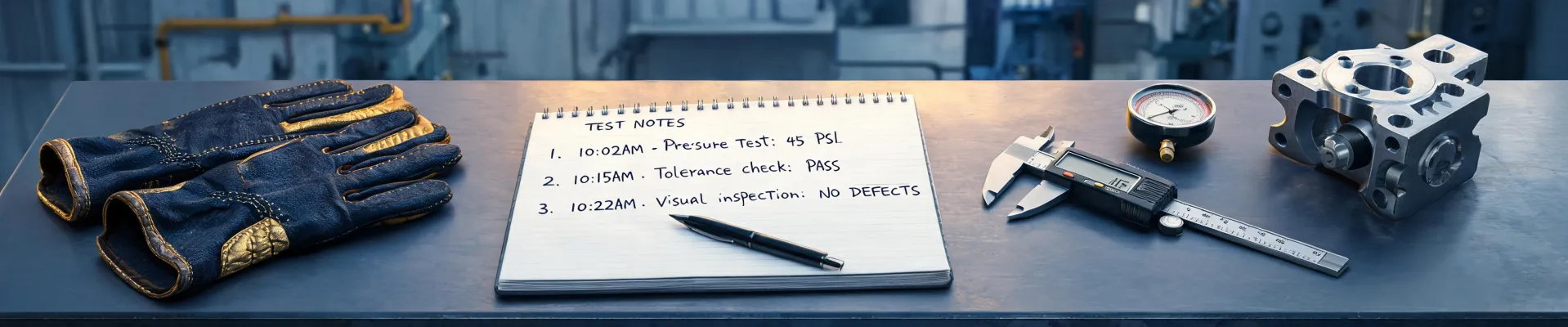
As a quality compliance manager at a safety equipment distributor, I review every order before it ships. That's roughly 2,500 line items a year. It took me four years and more than a few rejected lots to understand that 'best' is the most dangerous word in PPE. A glove, a boot, or a coverall is only 'best' when it matches the task, the hazard, and the person wearing it.
That's why this guide is not a one-size-fits-all shopping list. It's a decision tree for three common categories: Showa gloves, disposable coveralls, and work boots. If you're trying to decide what to put on the same purchase order, here is the way I sort it out.
Start with the worst likely outcome
Before you compare products, decide which failure would hurt someone the most. The question isn't 'which product has the longest spec sheet?' It's 'which hazard is most likely to put someone in the hospital?' Everything else follows from that.
- Hands-first scenario: you're handling oily parts, doing assembly, sorting, light packaging, or any job where a lost grip means cuts, pinches, or fatigue. Your main purchase is a glove.
- Contamination-first scenario: you're painting, sanding, spraying chemicals, ripping out insulation, or cleaning a workspace where skin and clothing contact is the hazard. Add disposable coveralls to the cart.
- Feet-first scenario: you're on a construction site, a warehouse dock, or unstable ground where falling objects, slips, and punctures can hit lower limbs. Work boots come first.
Most real jobs combine these. But the starting point should match the hazard that keeps you up at night.
Hands-first: Showa Atlas 370 nitrile gloves
If your primary concern is hand protection on dry or lightly oily work, the Showa Atlas 370 nitrile gloves deserve a close look. The 370 is a nitrile-coated knit glove, not a heavy chemical-dipping glove. It has a seamless nylon liner that follows the hand, and the textured nitrile palm gives you a reliable grip on small parts and smooth surfaces.
What makes it popular in industrial orders is the balance. It breathes better than solid nitrile or PVC gloves, so hands stay drier during long shifts. It also has enough dexterity for things like small assembly and inspection. In my QC notes, I use the phrase 'all-day glove' for this category.
Even after we made the Atlas 370 our default for dry assembly work, I kept second-guessing. What if the open breathable liner wasn't durable enough? The two weeks before the first reorder data came in were stressful. Then the reorder rate explained what the datasheet couldn't: people were actually willing to keep them on.
Here's the boundary: the Atlas 370 is not a cut-resistant glove, and it is not a chemical barrier glove. If you're working with sharp metal edges, you need a Showa glove with an ANSI/ISEA 105 cut level. If you're handling solvents or corrosive liquids, you need a glove tested against that specific chemical, not a general-purpose coated glove. In my opinion, admitting that is part of good spec'ing.
Contamination-first: when disposable coveralls earn their place
Here's the thing: disposable coveralls are one of those items people buy in panic and then leave in the corner. That's not because they lack value—it's because they're often bought for the wrong reason. You don't need a coverall just to stay clean. You need one when staying clean affects safety.
I'll be honest, coveralls are not where I spend most of my test time. I look at gloves and boots. But I've helped enough customers through orders to tell you what matters. If the job creates dust, fibers, paint mist, or chemical splash, choose a coverall with a documented barrier fabric, not just a cheap polypropylene gown. Check the seams. For loose particles, stitched seams may be fine; for liquid splash or fine dust, you want taped or sealed seams.
When are they overkill? For indoor assembly without skin or respiratory hazards, a coverall can add heat stress and unnecessary cost. If the risk is limited to your arms or hands, a long apron and gloves might be enough. This is one of those cases where the more specific answer beats the 'better safe than sorry' default.
Feet-first: work boots and the 'Hey Dude work boots' reality check
Now let's talk about the search term that makes my quality-control eye twitch: 'hey dude work boots.' I understand the appeal—you want the comfort of a sneaker in a boot. But Hey Dude makes lifestyle and casual footwear, not safety-rated work boots. A soft-soled casual shoe has no place on a site with falling loads, rebar, or wet concrete.
Look, I'm not saying all work boots have to be heavy and miserable. Modern work boots can be comfortable. But 'comfortable' doesn't equal 'protective'. Before you buy any work boot, check for a defined safety rating. In North America, that usually means ASTM F2413-18 (the U.S. standard for protective footwear). If the boot doesn't state a rating, don't assume it has one.
One brand that shows up over and over on our jobsite specs is Timberland. Many of their work boots are selected for leather durability, slip-resistant outsoles, and electrical hazard protection. So, where to buy Timberland work boots? Start with authorized workwear dealers or Timberland's own channels. The reason I say that is authenticity and traceability. In a Q1 2024 audit, we flagged a batch of 'black work boots' sold through an unverified marketplace listing; they had no safety-toe certification at all. That's a serious liability hidden behind a familiar logo.
How to tell which scenario you're in
If you're still not sure, do the worst-case test. Ask your team three questions:
- What is the first thing that would break or fail in a bad half-hour?
- What would cause a lost-time injury: a missed grip, a splash, or a slip-and-fall?
- What is the environment: sharp edges, wet spray, or moving equipment?
If you answer 'missed grip on an oily part,' start with hands. If you answer 'splash and contamination,' start with coveralls and the right glove material. If you answer 'slip or falling object,' start with certified work boots. It sounds obvious, but the number of purchase orders I've seen with gloves and boots reversed proves it's not.
Also think about wearability. The best glove in the world fails if workers take it off because it's too stiff or hot (which, honestly, is the part people miss when they stare at a spec sheet). The same goes for boots. That's why I often say: the best PPE is the one people will actually wear, as long as it still meets the minimum rating for the hazard. Comfort and protection both matter—don't trade one for the other.
Don't let the spec sheet fool you
I'll say it plainly: I'd rather work with a specialist who knows their boundaries than a generalist who claims to be an expert in every category. If a supplier says, 'This glove is perfect for everything,' that's a red flag. If they say, 'This is not our strength, but here is who does it better,' that trust earns the next order.
Before you place an order, run a quick verification:
- Confirm the hazard standard, not just the product family.
- Verify the exact model code (e.g., Showa Atlas 370 vs. a cut-resistant Showa style).
- Test one sample batch with the people who will do the job.
- Keep the test report or spec sheet in your purchasing files.
Quality isn't the highest-spec product on the shelf. It's the product that matches the hazard, passes the field test, and arrives with the paperwork to prove it. That's the way I see it, and it's why I still have a job after rejecting 11% of first deliveries in 2024.

Maeve Callahan
Maeve Callahan is a head-protection analyst covering Type I and Type II hard hats, climbing-style safety helmets, bump caps, chin straps, suspensions, liners, and face-shield carriers. She applies ANSI Z89.1, EN 397, and EN 12492 criteria while comparing impact attenuation, penetration resistance, lateral deformation, electrical class, retention strength, field of vision, mass, fit range, and temperature conditioning. Her guides help EHS teams, contractors, utilities, and buyers select helmet systems for overhead hazards, work at height, electrical exposure, accessory compatibility, and worker acceptance.
Leave a Technical Comment