
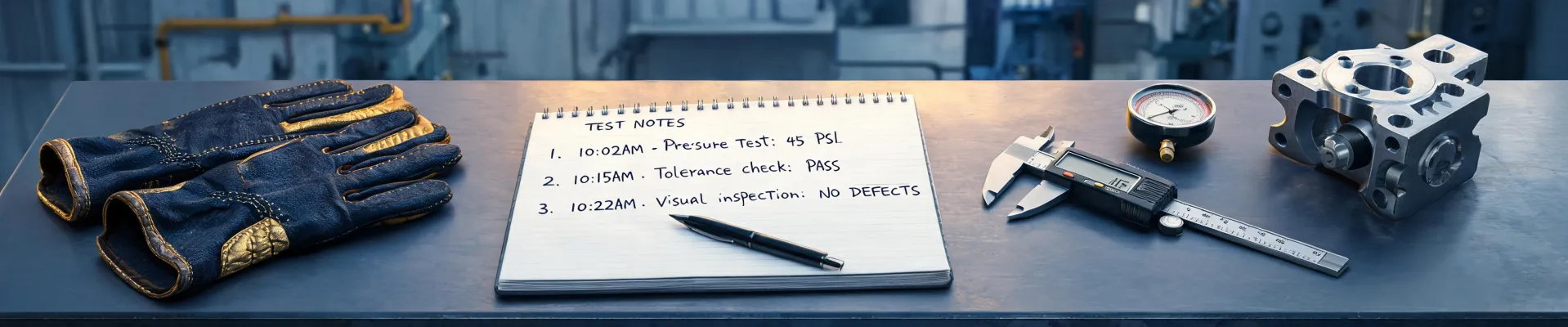
September 14, 2022. I was standing in the maintenance office holding a pair of Showa arc flash gloves that were about to cost my company $1,400. Not because the gloves were defective. Because I'd bought the wrong protection class, and I only found out when a safety auditor asked me a question I couldn't answer.
"Do you know what this Class 00 rating means?" he said, turning one of the gloves inside out and tapping the label with his fingernail.
I had an answer. It just wasn't the right one.
How a Maintenance Tech Became the PPE Guy
Quick background. I spent eight years as a maintenance technician before getting promoted to safety coordinator in early 2021. I wasn't the most qualified candidate—I was just the only one on the crew who'd actually read NFPA 70E cover to cover, which apparently counts for something.
With the title came a new responsibility: PPE purchasing. No training course, no budget class, no mentor. Just a login to the supplier portal and a stack of request forms from the floor. I've been handling PPE orders for our plant for about three years now. In my first year, I made three significant selection mistakes, totaling roughly $4,700 in wasted budget. This is where they came from.
Mistake #1: Showa Arc Flash Gloves, Wrong Class
Everything started with a 480V switchgear upgrade. The arc flash study came back with specific requirements—including arc flash rated gloves with a minimum rating of 12 cal/cm², based on the incident energy at that equipment.
I read "arc flash rated" and went shopping. I typed "showa arc flash gloves" into the supplier portal and ordered the first result that looked right. The product page said "arc flash rated." Showa is a brand I've trusted for hand protection across the board—they make everything from disposable nitrile to cut-resistant Kevlar to specialty electrical gloves. A reputable brand plus the right product name? In my head, that was a no-brainer.
Here's the thing: "arc flash rated" is not a single universal rating. Showa arc flash gloves come in classes—Class 00, Class 0, Class 1, Class 2—and each one has its own maximum use voltage and its own arc performance level. The ones I ordered were Class 00, which handles up to 500V AC. Our system was 480V. That looked like a match.
It wasn't.
The arc flash study never asked for a voltage class. It asked for a minimum arc rating, because the incident energy at that panel was high enough that getting it wrong could be fatal. Voltage rating tells you how much electrical stress the rubber insulation can handle before it breaks down. Arc rating tells you how much thermal energy the glove can withstand in a flash. Two different numbers, one pair of gloves, and I only knew one of them.
Everything I'd read about electrical PPE said "match the glove class to your system voltage." My experience says that advice is dangerously incomplete. Incident energy, not nominal voltage, is what determines the arc rating you actually need. It took an auditor pointing at a label for me to understand that.
He caught it during a pre-audit walkthrough. He wasn't rude about it—just asked me to explain the class rating, and when I froze, he explained it to me. Then he wrote a finding that my manager saw, and my manager wrote an email that I still wince at.
Cost: roughly $1,400 in expedited replacements, re-labeling the wrong gloves for use in lower-risk areas, and a chunk of credibility I didn't have to spare.
Mistake #2: "Kevlar Showa Kevlar Gloves." I Ordered by Name.
A few weeks later, the production supervisor dropped a request on my desk: "Kevlar Showa Kevlar gloves." That's the whole description. Forty-seven pairs.
I knew what he meant, or thought I did. Showa's Kevlar cut-resistant gloves—the same ones every maintenance crew seems to keep in rotation. I ordered them without a second thought.
Kevlar is a material. It's not a safety rating.
Under ANSI/ISEA 105, cut resistance is rated from A1 to A9. A1 stops light fabric cutting. A4 handles sharp sheet metal edges. A9 is for glass handling and heavy stamping. The previous order for this crew was A4, which matched the steel they were handling then. Mid-2022, the line switched to stamped components with unfinished edges, and the crew needed A4 or better. That upgrade request died in an email chain, and nobody realized until a scrap blade went through an A2 glove during a near-miss.
The photo in that incident report still sits in my head. The worker was fine—the blade caught the palm at an angle and stopped there. But the glove was rated A2, and the supervisor's note read: "This is not what we asked for."
Forty-seven pairs, $680, straight into the training bin. I ordered by product name when I should have ordered by standard. (Note to self: if a supervisor requests a glove by repeating the same word twice, walk over to their line and look at what they're actually cutting.)
Mistake #3: Black Work Boots, and the Timberland Question
And then there were the boots.
We signed a client contract in November 2022 that required every crew member on site to wear black work boots, six inches or taller, with a visible ASTM F2413 safety rating. Twelve contractors, on site in two weeks.
I placed the order and did what cost-conscious buyers do: I picked a recognizable brand. Timberland. Rugged, popular, half the crew already owned a pair. The question "are Timberlands work boots?" crossed my mind, and I answered it with a shrug. They look like work boots. They have that thick sole. They must qualify.
Some Do. Most Don't.
Timberland's PRO series—their actual work line—carries real ASTM F2413 ratings, with protective toes (composite and alloy options) and electrical hazard ratings. But the classic 6-inch boot, the one everyone's seen in every mall in America, is not a safety-rated work boot. No ASTM label, no impact rating, no compression rating. It's a lifestyle boot with a work-boot silhouette.
The client's safety officer caught it at the gate on day one. Two of my guys were sent back to the truck in their Timberlands. Working with the client, I rushed through a replacement order and selected Durango work boots—a brand that builds to the ASTM F2413 standard, with proper markings, proper toe options, and the right six-inch profile. The rating this time was correct.
But here's where I almost messed up again: the client's facility has a walking metal detector at security. Steel-toe versions of the Durango boots would've beeped on every single pass, meaning my crew would be unlacing twice a day. Composite toe was the right call, and I made it based on a vague memory from the site induction rather than actual verification.
At Least This Time I Checked the Specs
Had four days to decide. Normally I'd verify every requirement with the client's safety rep, but with the crew already on the ground, there was no time. In hindsight, I should have made that call before placing the first order. I got lucky—the composite toe worked, the boots passed inspection, and the crew got through security without a single beep from day one. But "got lucky" is not a procurement strategy.
The final bill for the boot saga: $110 restocking fee on the returned Timberlands, $2,170 for the replacement Durango work boots, and $340 in expedited shipping. Plus one very polite but painful conversation with our client liaison about "verification processes."
What the $4,700 Tuition Bought Me
I have mixed feelings about all of this. Part of me wants to tell it as a slick story where I fix everything. Another part knows the truth: I got called out on the first mistake, got lucky on the second, and got rescued by factory specifications on the third. The only thing I actually did right was build a system afterward.
Since January 2023, every PPE order at our plant goes through a 12-point pre-order checklist. I created it after the boot fiasco, and because I'm a safety coordinator, I documented the whole disaster.
- What specific hazard are we protecting against?
- Which standard applies? (NFPA 70E, ANSI/ISEA 105, ASTM F2413, etc.)
- What performance level does our risk assessment require?
- Does this product's label state that level explicitly?
- Is there an independent test report behind the claim?
- Which class or level does this exact SKU carry?
- Are there layering or compatibility requirements? (like leather protectors over rubber insulating gloves)
- Any site-specific constraints? (metal detectors, chemical exposure, temperature extremes)
- Are we stocking enough spares for the actual wear rate?
- Do the sizes match what the crew specified, not the supplier's default?
- Did the requester give me a protection level, or just a brand name?
- Could I explain this selection to an auditor while they're holding the product?
There's something satisfying about watching an order go through this checklist and come out clean. After the arc flash gloves, the Kevlar mess, and the boot scramble, seeing a simple confirmation of "level matches requirement" on a purchase order—that's the payoff.
Look, I'm not saying a checklist replaces training or common sense. It's a forcing function—a five-minute gate between "this product looks right" and "this product is right for our hazard." In the eighteen months since, it's caught 47 potential errors and saved us an estimated $8,000 in avoidable rework.
If I could redo that first year, I'd spend less time scrolling supplier catalogs and more time reading the standards that govern them. The conventional wisdom in this industry is "buy a good brand and you're fine." My experience: brand gets you quality materials and consistent manufacturing. Standards get you the right protection for the hazard. You need both—and the second one doesn't come printed on the box.
So before you place your next order of Showa gloves, or any glove, or any boot: check the label. Check the standard. Check the actual level. Five minutes of verification beats five days of correction. I've got the invoices to prove it.

Maeve Callahan
Maeve Callahan is a head-protection analyst covering Type I and Type II hard hats, climbing-style safety helmets, bump caps, chin straps, suspensions, liners, and face-shield carriers. She applies ANSI Z89.1, EN 397, and EN 12492 criteria while comparing impact attenuation, penetration resistance, lateral deformation, electrical class, retention strength, field of vision, mass, fit range, and temperature conditioning. Her guides help EHS teams, contractors, utilities, and buyers select helmet systems for overhead hazards, work at height, electrical exposure, accessory compatibility, and worker acceptance.
Leave a Technical Comment