
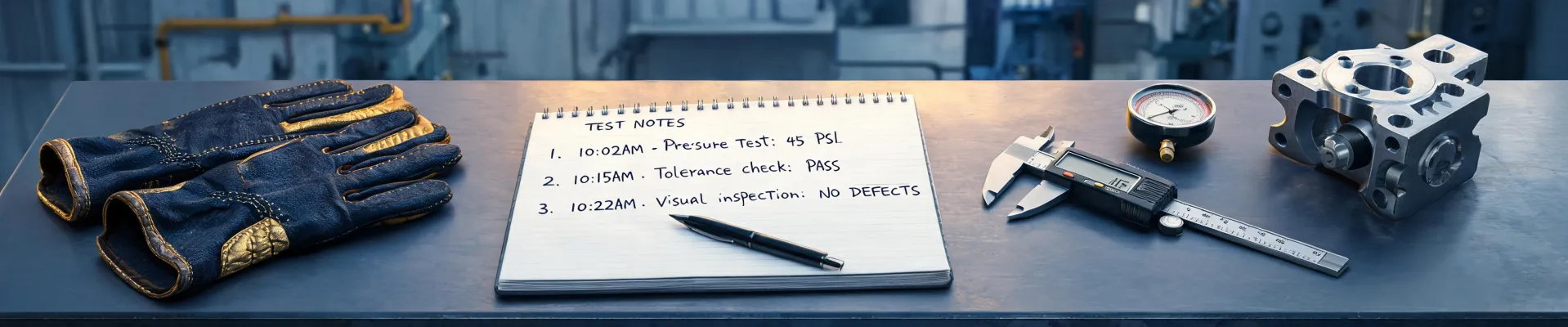
In March 2024, I stood in our PPE cage holding a trash bag full of failed gloves and trying to figure out how to explain this one to management. The fingertips were cracked. Coolant had soaked through the palms. A few pairs looked fine until you stretched them and saw the pinholes. On the floor next to the bag sat several sealed cartons of the same gloves, now useless, because no way was I issuing those to the floor again.
I've handled safety equipment orders at our shop for five years. I also run EHS for a metalworking plant with about 40 people on shift, so I'm the one who orders the PPE, keeps the glove matrix, and writes down our mistakes so we don't repeat them. In my first year (2020), I bought a bulk lot of “cut-resistant” gloves without checking the cut rating against the task. Those boxes sat in a cabinet until I finally handed them to the maintenance crew for paint work. Small loss. The March mistake was not small.
Here's how it started. We'd landed a contract for a new machining cell: CNC lathes, water-soluble coolant, sharp edges, and a lot of oily handling between operations. My glove matrix said the line should use Showa 730 nitrile gloves for the heavy oily work, and Showa N-Dex Free accelerator-free nitrile gloves for the bench stations and for any operator with a known skin sensitivity to rubber accelerators. In early March, I put in our normal restock and got a bad answer: the 730s were backordered, and the accelerator-free line was three weeks out. The cell was starting in four weeks, with a customer audit a week after that. I didn't have three weeks.
Then a regional supplier called with the exact story I wanted to hear. “We've got a glove that's basically the same,” the rep said. “Nitrile coated, in stock, about 30% less than your usual brand. I can have it on your dock Thursday.”
I knew the right move: ask for the data sheet, compare the ANSI/ISEA 105 ratings, and trial one box before committing. But there was a production meeting at 2 p.m., a budget target I'd promised to hit, and a sales rep who talked fast. I told myself, what are the chances a nitrile glove from a decent company is meaningfully worse than the one on my spec sheet? Apparently, the chances were high. I signed off on $1,620 worth of an unverified substitute.
For two days, the gloves looked fine in the box. On day three, the machine operators started bringing in pairs with wet palms. By day five, we'd pulled fourteen pairs off the line with cracks, soak-through, or blown seams. I told myself we could still use the cartons for lighter tasks. Then Ray came to my office.
Ray is one of our best CNC operators, and he has a Type IV allergy to rubber accelerators. Two years earlier, we'd moved him to an accelerator-free glove, and his hands finally cleared up. In the rush to stock the new cell, I let the rep's “basically the same” line replace the actual spec. The substitute gloves had no accelerator-free claim. The rep said nitrile is the safe one, and I let it slide. Ray rolled up his sleeves and showed me the red patches on the backs of both hands.
That afternoon, I called our regular distributor and ordered the real thing: Showa 730 nitrile gloves for the line, and Showa N-Dex Free accelerator-free nitrile gloves for the benches and for Ray's station. Two-day expedited delivery, $310 extra. I didn't argue about the price. I needed certainty more than I needed a bargain.
While I waited for that shipment, I did what I should have done a month earlier: I walked the whole floor with the audit checklist in my hand. The gloves were the headline, but not the whole story.
In the assembly area, one of the new hires had bought his own pair of Reebok work boots. Comfortable boots, good brand, and completely wrong for the floor: the label didn't carry the ASTM F2413-18 mark, so they didn't meet our composite toe work boots requirement. It wasn't the boot's fault. He'd bought them from a store that called them “work boots,” and for light warehouse use, they'd have been fine. But with steel stock moving around the cell, composite toe protection isn't a nice-to-have. We gave him a spare pair of composite toe work boots from the cabinet and sent him home with a copy of the footwear policy.
Then I found a frayed lanyard on the mezzanine, and a maintenance hire asked me a question I couldn't answer from memory: how does a no pull harness work? I looked it up with him, and the search results were their own lesson. “No pull” isn't a regulated term. In some harness catalogs it describes a design that's easier to get on and off; in other search results, the same phrase is about pet gear. So the useful answer starts with the standard and the manufacturer's manual, not with the marketing name.
That question cost me one phone call and ten minutes. The glove shortcut cost me more: $1,620 for substitute gloves we couldn't use, $310 in expedited freight, roughly $400 of my time to rework the glove matrix and retrain people, plus Ray's doctor visit and two conversations with management I'd rather forget. Call it $2,400 and a clear view of what “I don't have time to verify” really costs.
The audit came eleven days after that morning in the cage. We passed, but only because the paperwork showed the correction: the glove matrix listed the Showa 730 nitrile gloves and the accelerator-free gloves, the boxes matched the spec sheets, and every pair on the floor was accounted for. If I'd still been issuing the substitutes, that audit would have produced a major nonconformance, and the new contract might have disappeared with it.
It took me five years and two expensive mistakes to learn a simple idea: when a deadline is real, certainty is worth paying for. The rush fee doesn't just buy speed. It buys a supplier's commitment to a date and a specification. Fast and wrong is still wrong.
So here's the short checklist I use now:
- Data sheet before purchase order. Confirm the exact model (Showa 730 nitrile gloves, for example) and its ANSI/ISEA 105 ratings against the task.
- If anyone on the floor has a history of skin irritation, accelerator-free is not optional. I verify the packaging says it before the carton goes in the cage.
- Footwear gets checked for the ASTM F2413 mark. If the label doesn't say composite toe protection, the brand name doesn't matter.
- When I hear a question like “how does a no pull harness work,” I get an answer before the order, not after the installation.
Bottom line: I'd rather pay a rush fee for the right product than pay the whole floor for my own guess. The wrong gloves delivered fast are still the wrong gloves. The right gloves, delivered on a date somebody guarantees, are worth every cent of the premium.

Maeve Callahan
Maeve Callahan is a head-protection analyst covering Type I and Type II hard hats, climbing-style safety helmets, bump caps, chin straps, suspensions, liners, and face-shield carriers. She applies ANSI Z89.1, EN 397, and EN 12492 criteria while comparing impact attenuation, penetration resistance, lateral deformation, electrical class, retention strength, field of vision, mass, fit range, and temperature conditioning. Her guides help EHS teams, contractors, utilities, and buyers select helmet systems for overhead hazards, work at height, electrical exposure, accessory compatibility, and worker acceptance.
Leave a Technical Comment