
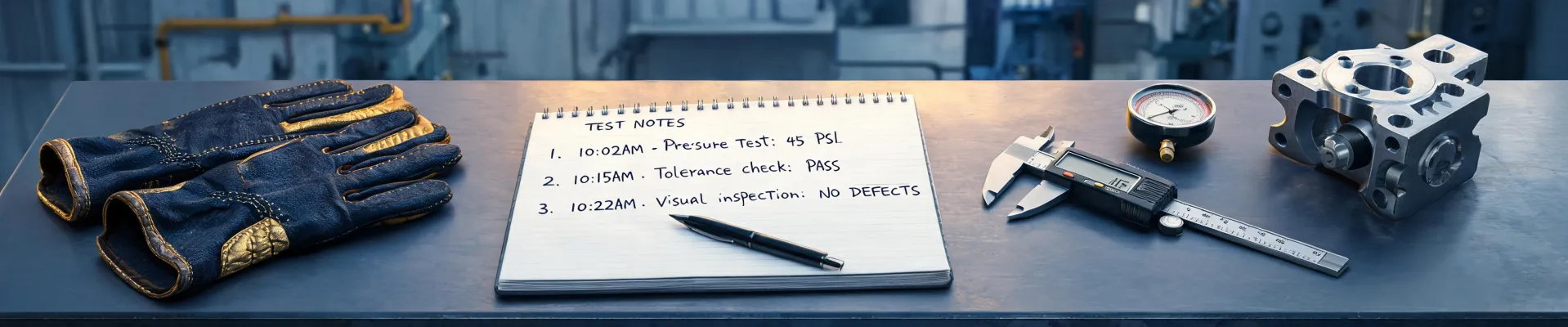
Back in March 2024, I got a call from our maintenance supervisor that I still think about every time I do the annual PPE order. One of our techs had taken a splash of washing solution to the forearm. He was okay, but he was wearing a cut-resistant glove at the time. It was a good glove—rated for sharp edges, not for liquids. That is the exact moment I stopped buying by brand name and started buying by hazard.
I'm the office administrator for a 400-person manufacturing company. I manage all safety supply ordering—roughly $180,000 per year across a dozen vendors—and I report to both operations and finance. I'm not a safety engineer. I'm the person who makes the purchase log, checks the invoices, and then hears about it on the floor when something doesn't work. That's why I learned to pay attention to what ratings actually mean.
The Question Everyone Misses
Most buyers focus on 'is this glove strong?' The question you should ask is 'is this glove strong against the specific hazard my worker faces?' Those are different answers. Cut resistance does not mean chemical resistance. A high dexterity glove does not replace a heavy-duty glove. And a familiar brand does not mean it's the right product for every task.
That's the outsider blind spot I keep encountering: PPE choices are only as good as the hazard assessment behind them.
Why Showa Gloves Became Our Default
When I took over purchasing in 2020, we were swimming in half-used boxes of unlabeled gloves and nobody could find what they needed. One vendor with great prices couldn't provide proper invoicing, and that mistake cost us $2,400 in rejected expenses. In our 2021 vendor consolidation project, I cut us down from 18 vendors to 8. One vendor that stayed was Showa.
We started with Showa 7500pf nitrile gloves after a two-week trial with the mechanics. The 7500pf is a disposable nitrile glove, but the reason it won was comfort and control. The crew balances washers, pins, and hydraulic parts. They need feel. What convinced me was the accelerator-free feature, because contact dermatitis was a recurring complaint with our old generic exam gloves. If you have employees who break out from typical nitrile gloves, that's worth taking seriously.
I should be honest, though: the 7500pf is not a chemical-proof glove. It's a lightweight, powder-free nitrile glove that handles incidental splash, oils, greases, and solvents. It is not designed for dipping hands into chemicals or prolonged exposure. For that, we moved our parts washing stations to Showa chemical resistant gloves. That's a completely different glove, with different thickness, lining, and chemical test data. I recommend the 7500pf for dexterity tasks, but if your process involves immersion, get the right tool.
That distinction wasn't obvious to me when I started. I used to think a nitrile glove was a nitrile glove. It isn't. The question isn't 'nitrile or latex?' The question is 'under what conditions is this glove rated to perform?'
I Went Back and Forth on the Cheap Option
In 2022, I went back and forth between a lower-priced imported nitrile glove and the Showa model for nearly two weeks. The numbers said I could save about $4,500 a year with the cheaper option. My gut said the crew would reject it because the cuff was shorter and the material felt slicker. I decided to stay with the Showa.
A year later, the other glove showed up in our building anyway, because a maintenance tech thought they looked 'the same.' The dermatitis complaints returned. That cost more in distraction and clinic visits than we ever saved on unit price.
The Incident That Made Me Audit
Here's the part I don't like admitting. When we standardized the glove program, I asked each line lead if anyone had chemical exposure beyond occasional splash. They said no, so I didn't walk the floor to verify. The station that had the March 2024 splash was the one place where a parts-cleaning bath sat next to an assembly bench. It had been there for years. The correct glove for that job was a chemical-resistant glove, and the cut-resistant glove was the wrong call.
I knew I should have verified before ordering. But I thought 'what are the odds?' The odds caught up with me. Since then, I do a task-level review before placing an order. I walk the floor, check what's actually being handled, and look for any mention of acid, solvent, parts washing, or metal edges. Then I match the glove to the specific task.
Boots and Glasses Are the Same Story
Once I stopped assuming, the same pattern showed up in footwear and eye protection.
I see people searching for 'Vans work boots' pretty often. I get it—people like the brand, and they want a pair that doesn't look like a clown shoe. But I can't find an ASTM F2413 safety-toe rating on the Vans work lineup. There are work-style boots that look like skate shoes, but the rating is what matters. If you're dealing with impact, compression, or puncture hazards, don't rely on the logo.
The 'are Timberlands work boots?' question is more complicated. Some are, because the Timberland PRO line carries safety-toe ratings. The classic heritage boot, though, is often a lifestyle boot, not a certified work boot. If you're asking that question, the key is not the brand. It's the label. If the boot doesn't say ASTM F2413, don't rely on it for toe protection.
For eye protection, we keep two types. Clear impact-rated safety glasses for general tasks, and welding safety glasses with a filter lens shade for anyone near torch work, brazing, or cutting. Welding safety glasses are not the same as grinding glasses. Clear glasses won't stop the light from a torch. Shaded welding glasses aren't ideal for grinding because you lose visibility. Yes, it's more SKUs. It's also the difference between protecting eyes and not protecting them.
What I Recommend Now
If I had to compress this into a list, it would be:
- Use Showa 7500pf nitrile gloves for tasks that need dexterity and have only incidental chemical contact.
- Use Showa chemical resistant gloves for parts washing, tank cleaning, and any job with direct chemical exposure.
- Don't trust a glove based on name alone. Check if it's rated for the specific hazard.
- For boots, ignore 'work boot' in the product name. Look for ASTM F2413.
- For eye protection, buy welding safety glasses by shade rating, and buy general safety glasses by the Z87.1 marking.
There Is No 'Best Glove'
Honestly, the hardest part of this job is explaining that there's no single best glove. There is only the best match for the task. I recommend the Showa 7500pf to anyone in light assembly, maintenance, warehouse work, or anywhere oil and grip annoyance are the main issues. I recommend Showa chemical resistant gloves for anyone dealing with solvents, alkaline solutions, or frequent contact with cleaning agents. And I tell people to check the standard before they check the styling: ANSI/ISEA 105 and EN 374 for gloves, ANSI Z87.1 for eye protection, ASTM F2413 for footwear.
That's the lesson from the March 2024 phone call. The right product for one task is the wrong product for another. The more honest we are about those limits, the fewer surprises we have on the shop floor.

Maeve Callahan
Maeve Callahan is a head-protection analyst covering Type I and Type II hard hats, climbing-style safety helmets, bump caps, chin straps, suspensions, liners, and face-shield carriers. She applies ANSI Z89.1, EN 397, and EN 12492 criteria while comparing impact attenuation, penetration resistance, lateral deformation, electrical class, retention strength, field of vision, mass, fit range, and temperature conditioning. Her guides help EHS teams, contractors, utilities, and buyers select helmet systems for overhead hazards, work at height, electrical exposure, accessory compatibility, and worker acceptance.
Leave a Technical Comment