
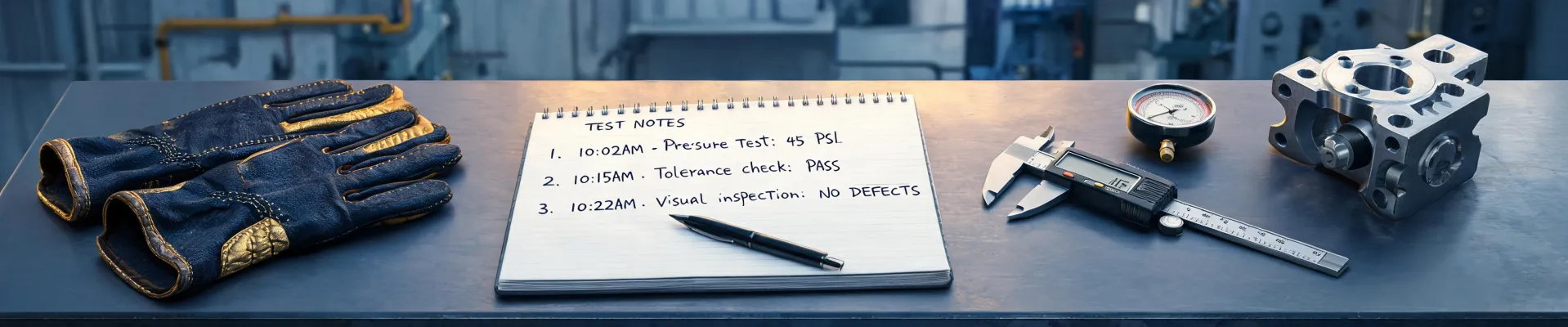
I'll say it straight: buying the cheapest work gloves you can find is a false economy. It's a mistake I made repeatedly, and I've got the wasted budget and the safety close calls to prove it.
I've been handling safety equipment orders for industrial clients for 7 years. In my first year alone, I made errors that cost us roughly $4,200 in reorders, rush fees, and lost productivity. Now I maintain our team's procurement checklist, and I can tell you—cheap gloves are at the top of the 'avoid' list.
For the record: I'm talking about B2B industrial procurement. Not your weekend gardening gloves. If you're buying for a crew of 10 or more, the math changes.
The Bargain Trap: My $890 Mistake
In September 2021, I ordered 500 pairs of a budget nitrile glove for a warehouse team. The price was unbeatable—about $0.30 per pair less than our usual spec. I thought I was being smart.
I wasn't.
Within three weeks, we had reports of tears during handling. The gloves weren't holding up. A $150 savings turned into an $890 redo: $740 on rush replacement gloves plus $150 in overtime for the crew who had to sort and reissue stock. Net loss: $740. Plus the embarrassment of telling the warehouse manager I'd screwed up.
Lesson learned: the upfront price is just the entry ticket.
What You're Actually Paying For
Here's what I didn't understand early on: a glove's cost isn't just the price tag. It's the total cost of ownership—durability, dexterity, protection level, and compliance.
Take cut resistance. A bargain glove might claim 'Level 3' protection, but the consistency varies wildly. I've seen cheap gloves fail ASTM testing within the same batch. That's a liability nightmare. According to OSHA guidelines (osha.gov), employers are responsible for ensuring PPE meets performance standards—and that means consistent quality, not just a label.
Or chemical resistance. A generic nitrile glove might protect against some solvents, but degrade quickly against others. The wrong choice could mean hand exposure. That's not a cost-saving moment; that's a safety violation.
What I've learned is that specialists like Showa invest heavily in material science. Their biodegradable nitrile, accelerator-free formulations, and arc flash-rated gloves aren't just marketing—they represent genuine engineering. I don't expect a generalist glove maker to have that depth.
"The vendor who said 'this isn't our strength—here's who does it better' earned my trust for everything else."
Why Specialists Win (Every Time)
Here's my position: a supplier who claims to be great at everything is usually great at nothing. This applies to gloves, work boots, safety glasses—all of it.
Showa is a glove specialist. They don't make work boots or bifocal safety glasses. That's fine. I'd rather source gloves from a company that's obsessed with hand protection than one that tries to sell me everything. When I need work boots, I go to a boot specialist. When I need bifocal safety glasses, I go to an eyewear specialist. Know who does what best.
That's the 'expertise boundary' principle I follow now. A vendor who admits 'we don't do X, but here's who does' earns more trust than one who overpromises.
So when it comes to gloves, I look for:
- Material consistency – Can they prove batch-to-batch quality?
- Standard compliance – Do they test to ANSI/EN standards? (Per ANSI/ISEA 105, ASTM F1790-19 for cut resistance—source: ANSI.org)
- Application match – Cut, chemical, heat, arc flash? Each needs a different glove.
- Supply stability – Can they deliver when I need it?
But What About the Price Gap?
I get it. Budget gloves are cheap. When you're buying for a large team, the price difference adds up. You're right—$0.30 per pair matters when you're ordering 1,000 pairs.
Here's my counter: calculate the true cost. If a budget glove lasts 2 shifts and a premium glove lasts 10, which is cheaper per shift? If a budget glove fails during a critical task, what's the cost of the injury or contamination? If a budget glove doesn't have proper certification, what's the liability?
My rule of thumb: never buy gloves solely on unit price. Always factor in durability, protection, and compliance. The 'cheap' option rarely wins that calculation.
The Bottom Line
I believe in buying from specialists who know their lane. For hand protection, that means companies like Showa who've spent decades perfecting glove technology. Not because they're the only option, but because their focus means better quality, better testing, and fewer surprises.
Am I saying you should never buy budget gloves? No. For low-risk tasks with minimal hazard, a basic glove might be fine. But for real industrial work—cutting, chemicals, arc flash—don't compromise.
I made that mistake so you don't have to. Spend a little more upfront. Save a lot more later.
Pricing as of March 2025 based on distributor quotes; verify current rates. Safety standards per ANSI/ISEA 105 and EN 388; verify current requirements at official sources.

Maeve Callahan
Maeve Callahan is a head-protection analyst covering Type I and Type II hard hats, climbing-style safety helmets, bump caps, chin straps, suspensions, liners, and face-shield carriers. She applies ANSI Z89.1, EN 397, and EN 12492 criteria while comparing impact attenuation, penetration resistance, lateral deformation, electrical class, retention strength, field of vision, mass, fit range, and temperature conditioning. Her guides help EHS teams, contractors, utilities, and buyers select helmet systems for overhead hazards, work at height, electrical exposure, accessory compatibility, and worker acceptance.
Leave a Technical Comment