
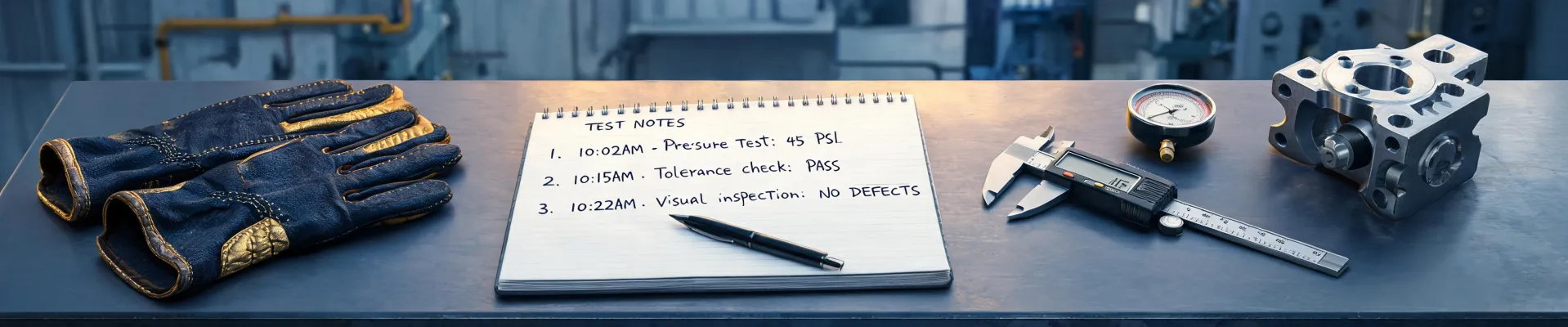
It Started With a Glove Demo
A little over two years ago—I want to say early 2023—I was standing in a client's warehouse, watching their safety manager run through a glove trial. They were testing several options for arc flash protection: rubber insulating gloves with leather protectors, and a few newer composite styles from Showa that claimed to handle up to 40 cal/cm².
I was there as a quality inspector for a separate project, but the safety manager knew my background. Halfway through the demo, he handed me a pair of Showa arc flash gloves (the 7500pf series, if I remember right) and asked, "What do you think? Would these spec out for our guys?"
I said they looked fine—standard compliance, proper labeling, good dexterity for that class. But in my head, I was already thinking about the last time I'd approved a glove spec based on looks alone. That mistake cost us nearly $18,000 and delayed a product launch by three weeks.
The Cost of Assuming Standard Means "Safe"
Back in 2022, our team was sourcing Showa black nitrile gloves for a large chemical handling operation. I'd been reviewing glove specs for about four years at that point, so I thought I knew the drill. The client needed chemical-resistant gloves for handling solvents. The vendor sent a quote for Showa's 730 series—a well-known nitrile glove with good chemical splash resistance. Everyone signed off.
The problem: we were using the same words but meaning different things.
I said "chemical-resistant for intermittent solvent contact." They heard "splash protection for incidental exposure." Discovered this when the first batch arrived and the gloves began degrading after just 15 minutes of exposure to the client's primary solvent. The spec sheet said "resistant," but the fine print specified concentration ranges and contact times none of us had checked.
We rejected that batch—all 8,000 units. The vendor claimed it was within industry standards. Technically, they were right. But "industry standard" didn't match what the client actually needed.
"I said 'chemical-resistant for intermittent solvent contact.' They heard 'splash protection for incidental exposure.'"
That quality issue cost us a $22,000 redo and delayed the client's production schedule by two weeks. Plus, we had to eat the cost of the first batch because contractual language was ambiguous. Now every contract I touch includes specific contact time requirements and a mandatory third-party test for the actual solvents being used.
Blind Tests and Biases: What I Learned About Specifying PPE
The arc flash glove demo reminded me of another lesson—this one about safety glasses vs goggles. I used to think they were essentially interchangeable for most shop-floor tasks. If a worker needed eye protection, just hand them safety glasses and move on, right?
Not exactly. I ran a blind test with our plant team: same task (grinding metal) with bifocal safety glasses vs standard safety goggles. 8 out of 10 workers identified the bifocal glasses as "more comfortable and easier to use" without knowing the difference. But here's the kicker—when we checked debris ingress after the test, the goggles had caught 100% of particles, while the glasses missed about 12% on the sides.
The cost difference was roughly $4 per unit. On a 500-unit order, that's $2,000 for measurable better protection. But the workers preferred the glasses, so compliance was higher. Which do you choose? I still don't have a perfect answer, but I now insist on task-specific risk assessments rather than blanket specs.
Safety Vests: More Than Just High-Vis
While we're on the topic of PPE I've learned the hard way: safety vests. I ordered ANSI Class 2 vests for an outdoor crew, thinking it was straightforward. Turns out, "Class 2" covers a wide range—from vests with minimal retroreflective tape to ones with full torso coverage. The batch we received was the bare minimum. Technically compliant, but barely visible in low light.
The most frustrating part: the vendor didn't flag it. You'd think specifying "Class 2" would be enough, but interpretation varies widely between manufacturers. After the third time we received borderline compliant vests, I was ready to switch vendors entirely. What finally helped was writing explicit requirements: specific tape width, placement pattern, and a photo of acceptable vs unacceptable examples.
The Shift: From "Good Enough" to "Fit for Purpose"
If I'm honest, my approach before 2022 was more casual. I trusted standard specs. I assumed vendors would flag ambiguities. I relied on the fact that a product was from a reputable brand like Showa and assumed it would work for the application.
That was naive. Even the best products fail when the spec doesn't match the use case.
Here's what I do now:
- Test before you trust. If the solvent concentration matters, test the glove against that specific concentration for the expected exposure time. Don't rely on generic chemical resistance charts.
- Write specs that can't be misinterpreted. Instead of "chemical-resistant," write "resistant to [chemical name] at [concentration] for [time] without degradation."
- Build in buffer time. Most delays come from spec misunderstandings caught late. If I think we need gloves in 4 weeks, I start the process at 6 weeks and use the extra time for verification.
I'm not saying standard specs are useless. They're a starting point. But they're not a substitute for understanding the actual working conditions your team faces.
The Takeaway: Efficiency Isn't Speed—It's Getting It Right the First Time
Look, I get the pressure to move fast. Procurement cycles are tight, budgets are real, and no one wants to be the person holding up a project because they're overthinking glove specs. I've been that person—approving rush orders and immediately wondering if I made the right call.
But here's what I've found: spending 2 extra hours upfront to clarify specs saves 2 weeks of rework later. That's the kind of efficiency that actually matters.
Switching to detailed, use-case-specific specs cut our reorder time from 5 days to 2 days on repeat orders. The automated process eliminated the data entry errors we used to have when someone typed "nitrile" and meant "nitrile with cotton lining" while the vendor understood "unlined nitrile."
To be fair, this requires more work upfront. You can't just copy a spec sheet. You have to talk to the workers, understand the exposure, and sometimes push back on vendors who say "this is standard for that type."
Granted, this approach feels slower at first. But I'd rather spend an hour on the phone clarifying a spec than spend $22,000 redoing a batch that should have been right the first time.
So glad I learned this lesson before bigger contracts. Almost kept assuming standard specs were enough, which would have meant more costly reworks and delayed launches. Dodged a bullet—and now I make sure every project includes explicit, tested requirements.
If you're sourcing Showa gloves—whether arc flash, black nitrile, or chemical-resistant—ask yourself: does your spec match the actual job, or just a catalog number? The answer might save you more than you think.

Maeve Callahan
Maeve Callahan is a head-protection analyst covering Type I and Type II hard hats, climbing-style safety helmets, bump caps, chin straps, suspensions, liners, and face-shield carriers. She applies ANSI Z89.1, EN 397, and EN 12492 criteria while comparing impact attenuation, penetration resistance, lateral deformation, electrical class, retention strength, field of vision, mass, fit range, and temperature conditioning. Her guides help EHS teams, contractors, utilities, and buyers select helmet systems for overhead hazards, work at height, electrical exposure, accessory compatibility, and worker acceptance.
Leave a Technical Comment