
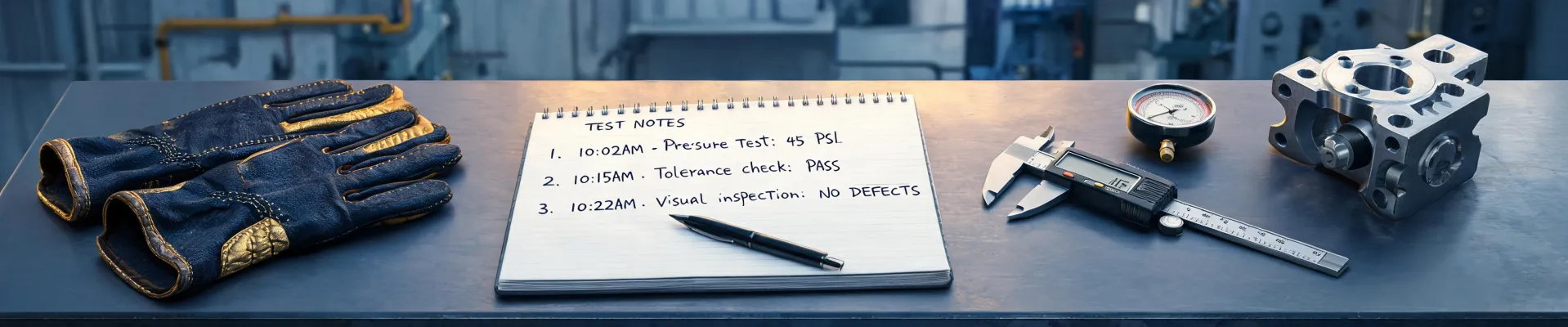
In my first year handling safety equipment orders (2017), I made what I now call the "looks tough enough" mistake. I ordered 500 pairs of a general-purpose nitrile glove for a facility handling solvents. The gloves looked thick. The price was reasonable. Everyone approved.
Three weeks later, the gloves were dissolving. Swelling. Cracking. I had workers complaining about chemical smell inside the gloves, and one guy got a mild chemical burn before we caught it. 500 pairs, roughly $1,200, straight to hazardous waste disposal. Plus a 2-day production delay while we sourced replacements. That's when I learned that chemical glove selection isn't about thickness. It's about chemistry.
What I'm going to share here isn't from a chemistry textbook. I'm not a chemical engineer, so I can't speak to molecular structures or polymer science. What I can tell you from a procurement perspective is how to read spec sheets so you don't end up like I did — with a pile of useless gloves and a very frustrated safety manager.
The Problem: Why "Chemical-Resistant" Gloves Fail at Their Job
Most people assume "chemical gloves" are a single category. You buy them, they work. The reality is messier. A glove that handles isopropyl alcohol perfectly might fail against acetone in minutes. A glove rated for splash protection will let you down during continuous immersion.
The mistake I made — and I see it constantly in industrial buyers — is treating chemical resistance as a yes/no checkbox. It's not. It's a spectrum with specific limits. (Note to self: I really should make that the first slide in every new hire training.)
The Deep Reasons: What Nobody Told Me About Chemical Glove Specs
Here's the part that surprised me most. There are three completely different metrics that determine whether a chemical glove actually works for your application. Most buyers only look at one.
1. Degradation Rating (The "Will It Fall Apart" Metric)
This tests how much the glove's physical properties change when exposed to a chemical. Swelling, hardening, cracking — all signs of degradation. A glove might pass degradation testing but still be unsafe because...
2. Permeation Rate (The Silent Danger)
This is where I got burned (literally, almost). Permeation measures how fast chemicals move through the glove material at the molecular level. A glove can look perfectly fine on the outside while chemicals are migrating through to your skin. The standard measurement is Breakthrough Time — how long it takes for the chemical to be detected on the other side.
Industry standard: For most industrial applications, a breakthrough time of 480+ minutes (8 hours) is considered excellent. But here's the kicker — that's for continuous contact. If you're dealing with intermittent splash, lower ratings can be acceptable.
Reference: EN 374 and ASTM F739 standards for permeation testing.
3. The Chemical Mix Problem
Here's something I didn't think about until the second failure. Most chemical resistance data is tested against single chemicals. But real industrial environments use mixtures. Solvents mixed with acids, cleaning agents with unknown additives. Glove ratings against individual components might not apply to the mix. (I really should have known this one earlier.)
The Cost of Getting It Wrong — It's More Than Just Gloves
Let me give you the numbers from my mistakes (and I've documented them so I can show others):
- Mistake #1: Ordered 500 pairs of nitrile gloves for a solvent-heavy facility. Wasted: $1,200 in product + $450 in hazardous waste disposal + credibility with the operations team. Lesson: Always match glove material to the specific chemical.
- Mistake #2 (September 2022): Specified a high-chemical-rated glove for a task that only needed splash protection. Result: Overpaid by roughly 60% per pair. The engineers on-site found a better-suited option at half the cost. Lesson: Over-specifying is still a mistake.
The most frustrating part of industrial glove procurement is the lack of clear, comparable data. You'd think standardized test results would make it easy, but interpretation varies wildly. Delta E for print? Fairly standardized. Permeation breakthrough times? Not so much.
The Short Version: How to Actually Get the Right Chemical Glove
I'm not going to write a full selection guide here (that would be a separate article). But from one buyer to another, here's the condensed checklist I now use for every chemical glove order:
- List the specific chemicals — not just "solvents" or "acids." Exact names and concentrations.
- Check contact duration — continuous immersion vs. splash vs. incidental contact. This determines whether you need 480+ minute breakthrough or 30 minutes is fine.
- Verify the test data against your specific chemical — not a generic "chemical-resistant" label. Look for EN 374 or ASTM F739 test reports.
- Consider glove material first, thickness second. A thin but chemically compatible glove outperforms a thick but incompatible one every time.
I've been using Showa gloves for the past two years for most of our chemical handling needs — specifically their 7000 series and 6110PF biodegradable nitrile line — because their spec sheets include clear permeation and degradation data by chemical. But I'm not saying they're the only option. What I'm saying is: verify the data before you buy. Your safety manager will thank you.

Maeve Callahan
Maeve Callahan is a head-protection analyst covering Type I and Type II hard hats, climbing-style safety helmets, bump caps, chin straps, suspensions, liners, and face-shield carriers. She applies ANSI Z89.1, EN 397, and EN 12492 criteria while comparing impact attenuation, penetration resistance, lateral deformation, electrical class, retention strength, field of vision, mass, fit range, and temperature conditioning. Her guides help EHS teams, contractors, utilities, and buyers select helmet systems for overhead hazards, work at height, electrical exposure, accessory compatibility, and worker acceptance.
Leave a Technical Comment