
-
I've been buying industrial hand protection for 8 years. Here's what nobody tells you about small orders.
-
1. What's the biggest mistake when ordering small quantities of industrial gloves?
-
2. How can I tell if my Showa gloves are genuine, not counterfeits?
-
3. What should I check before accepting a delivery of disposable nitrile gloves?
-
4. When should I choose cut-resistant vs. chemical-resistant gloves?
-
5. Do safety glasses and work boots matter if I already have good gloves?
-
6. Is there a proper way to lace work boots for safety?
-
7. My order of Showa disposable nitrile gloves arrived but they seem flimsy—what went wrong?
-
1. What's the biggest mistake when ordering small quantities of industrial gloves?
I've been buying industrial hand protection for 8 years. Here's what nobody tells you about small orders.
If you've ever ordered a case of Showa disposable nitrile gloves and felt like the vendor treated you like a nuisance because your quantity was small—yeah, I've been there. In my first year (2017), I placed a $320 order for Showa 730 nitrile gloves and got delivered a batch that was literally two months from expiration. The vendor shrugged. No refund. I learned that day: small doesn't mean unimportant, it means you need smarter checks.
Take it from someone who's wasted roughly $18,000 on preventable mistakes: these FAQs will save you time, money, and credibility.
1. What's the biggest mistake when ordering small quantities of industrial gloves?
Assuming you'll get the same service as a bulk buyer. I did that with a $450 order of Showa 377 chemical-resistant gloves. The sales rep barely looked at my spec sheet. Four weeks later, the gloves arrived—wrong size, wrong thickness. (Ugh.) The reorder cost me an extra $210 plus a 2-week delay.
Here's what you need to know: A good supplier doesn't penalize small orders. If they treat your $200 order like a favor, that's a red flag. I now only work with distributors who publish clear minimum quantities and confirm specs in writing—even for five boxes. Way too many buyers skip this step.
2. How can I tell if my Showa gloves are genuine, not counterfeits?
Some knockoffs look scary convincing. I once ordered "Showa" Kevlar gloves from an unfamiliar online source—the price was too good. They arrived with the logo printed crooked, and the cut resistance was laughable. Basically a knitted oven mitt.
Check three things:
- Batch number and date code – real Showa gloves have a laser-etched or embossed code on the cuff or packaging.
- Packaging quality – genuine boxes have consistent printing, no smudges.
- ANSI/ISEA cut rating label – for cut-resistant models (like Showa 7500pf or 6110pf), the label must include a level (A1–A9). Fakes often skip this or use vague terms like "high cut."
Personally, I always verify through Showa's official distributor list (available on their website as of 2024). Saves a ton of hassle.
3. What should I check before accepting a delivery of disposable nitrile gloves?
Don't just open the box and count—I learned that after a $900 batch of Showa N-Dex 6100PF gloves failed our leak test because they were stored improperly during transit.
My pre-acceptance checklist (developed after the third rejection in Q1 2024):
- Expiration date – should be at least 18 months out. (I once got gloves with 6 months left—basically half-life.)
- Package integrity – any tears or crushed boxes? Reject immediately.
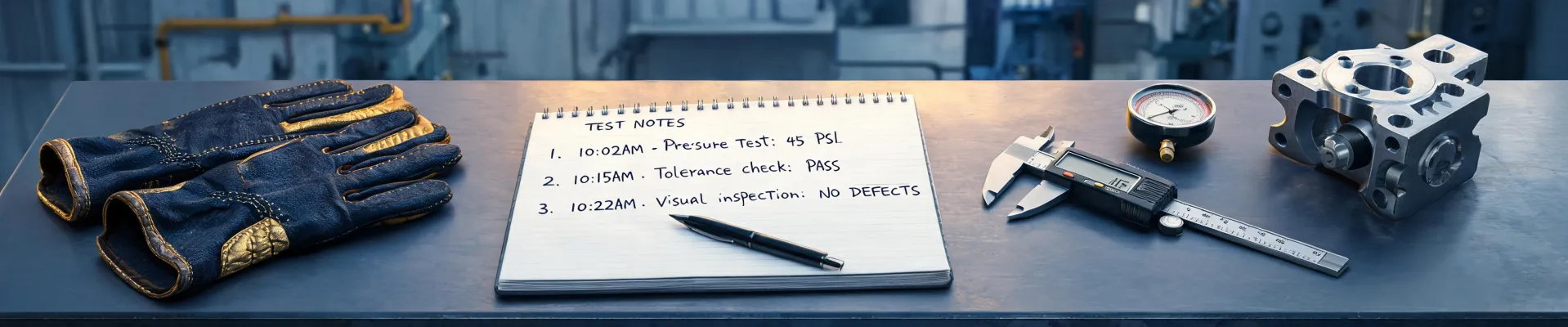
- Glove thickness – if you ordered 5 mil, measure with a caliper on a sample. I caught a batch that was actually 3.5 mil once. (Cost: $680 reorder plus embarrassment.)
This gets into manufacturing quality territory, which isn't my expertise. I'd recommend consulting the product data sheet for tolerance specs.
4. When should I choose cut-resistant vs. chemical-resistant gloves?
I assumed "heavy duty" meant both. Didn't verify. Turned out my team was using Showa 381 cut-resistant gloves (ANSI A4) for solvent cleaning... which soaked through in 10 minutes. That mistake cost $1,200 in ruined components and a 3-day production delay.
Rule of thumb from my experience:
- Cut/hazard risk → use Kevlar or Dyneema-lined gloves like Showa 7500PF (A4 cut, plus grip).
- Chemical splash → use nitrile or butyl rubber gloves with chemical resistance ratings (e.g., Showa 377 for acids).
- Don't assume hybrid – very few gloves excel at both. If you need both, layer or switch tasks.
Personally, I now keep a simple matrix: red label for chemical, yellow label for cut. Saves way more than the 10 minutes it took to make.
5. Do safety glasses and work boots matter if I already have good gloves?
Seriously? Yes. I had a supplier tell me "your hands are the most important part"—which is true, but ignoring eye and foot protection is how you get a splinter in your eye or a crushed toe. I've seen three incidents in my own facility where gloves were perfect but a worker got hit with flying debris (safety glasses would've prevented) or dropped a heavy box on their foot (steel-toe boots would've helped).
If you're shopping for work boots, the lacing technique matters more than people think. Loose laces can cause blisters or even ankle rolls. But that's a topic for another day—I'll just say: don't skip safety glasses. ANSI Z87.1 rated glasses cost $10–20. A corneal abrasion costs way more. (Note to self: write a boot-lacing guide next.)
6. Is there a proper way to lace work boots for safety?
I'm not a podiatrist, so I can't speak to medical aspects. What I can tell you from working in a warehouse: the secret is the heel lock lacing technique. It prevents your foot from sliding forward, which reduces toe-jamming and blisters.
Quick method:
- Lace normally to the second-to-last eyelet.
- Instead of crossing, thread each lace straight up on the same side, creating a loop on each side.
- Cross the laces through the opposite loops, then pull tight and tie normally.
I learned this after a $250 pair of boots gave me blisters on day one. (Roughly speaking, this trick added 30 seconds to my morning routine and saved me a ton of pain.)
7. My order of Showa disposable nitrile gloves arrived but they seem flimsy—what went wrong?
First, check the thickness spec on the box. Showa's disposable lines range from 2 mil (N-Dex 6100PF) up to 8 mil (Showa 730). If you ordered a 2 mil glove for heavy-duty use, that's the problem—not the quality.
I once ordered Showa 370 nitrile gloves (4 mil) for a job that needed 6 mil. The gloves kept tearing during assembly. Instead of returning them (the vendor said they were within spec), I ended up double-gloving, which cost more in the long run. (Take this with a grain of salt: double-gloving is acceptable in some situations, but it's not ideal.)
Bottom line: match the glove thickness to the task. For general inspection, 4–6 mil is fine. For chemical handling, 8+ mil. Always verify the spec sheet before ordering—I mean it.
This information was accurate as of Q1 2025. ANSI standards and product specs change, so verify current details with Showa or your distributor. If you've got a small order and a cautious budget, don't let anyone make you feel small—good suppliers are out there.

Maeve Callahan
Maeve Callahan is a head-protection analyst covering Type I and Type II hard hats, climbing-style safety helmets, bump caps, chin straps, suspensions, liners, and face-shield carriers. She applies ANSI Z89.1, EN 397, and EN 12492 criteria while comparing impact attenuation, penetration resistance, lateral deformation, electrical class, retention strength, field of vision, mass, fit range, and temperature conditioning. Her guides help EHS teams, contractors, utilities, and buyers select helmet systems for overhead hazards, work at height, electrical exposure, accessory compatibility, and worker acceptance.
Leave a Technical Comment